


- Afhalen na 1 uur in een winkel met voorraad
- Gratis thuislevering in België vanaf € 30
- Ruim aanbod met 7 miljoen producten
- Afhalen na 1 uur in een winkel met voorraad
- Gratis thuislevering in België vanaf € 30
- Ruim aanbod met 7 miljoen producten





€ 94,95
+ 189 punten
Omschrijving
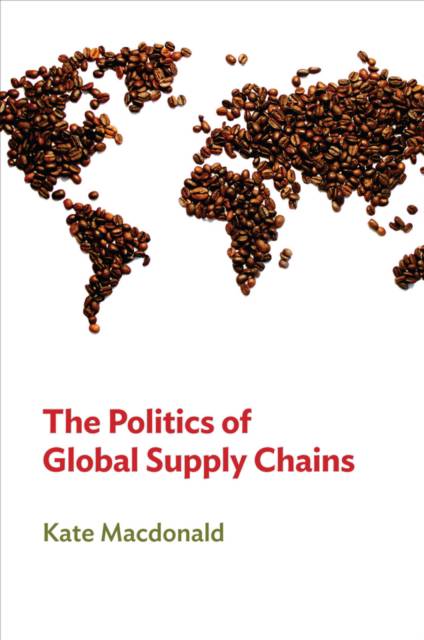
The Politics of Global Supply Chains analyses the changing politics of power and distribution within contemporary global supply chains. Drawing on over 300 interviews with farmers, workers, activists, businesses and government officials in garment and coffee sector supply chains, the book shows how the increased involvement of non-state actors in supply chain governance is re-shaping established patterns of global political power, responsibility and accountability.
These emerging supply chain governance systems are shown to be multi-layered and politically contested, as transnational governance schemes interact with traditional state governance arrangements in both complementary and conflicting ways. The book's analysis of changes to the relationship between state and non-state actors within transnational governance processes will be of particular interest to scholars and students of globalisation, global governance and regulation.
The Politics of Global Supply Chains also suggests some practical ways by which the effectiveness and accountability of supply chain governance could be strengthened, which will interest both scholars and practitioners in fields of global business regulation and corporate social responsibility. Conclusions are relevant to the business and civil society actors who participate directly in non-state governance schemes, and to state regulators whose distinctive governance capacities could play a much greater role than at present in supporting transnational, non-state governance processes.
These emerging supply chain governance systems are shown to be multi-layered and politically contested, as transnational governance schemes interact with traditional state governance arrangements in both complementary and conflicting ways. The book's analysis of changes to the relationship between state and non-state actors within transnational governance processes will be of particular interest to scholars and students of globalisation, global governance and regulation.
The Politics of Global Supply Chains also suggests some practical ways by which the effectiveness and accountability of supply chain governance could be strengthened, which will interest both scholars and practitioners in fields of global business regulation and corporate social responsibility. Conclusions are relevant to the business and civil society actors who participate directly in non-state governance schemes, and to state regulators whose distinctive governance capacities could play a much greater role than at present in supporting transnational, non-state governance processes.
Specificaties
Betrokkenen
- Auteur(s):
- Uitgeverij:
Inhoud
- Aantal bladzijden:
- 224
- Taal:
- Engels
Eigenschappen
- Productcode (EAN):
- 9780745661704
- Verschijningsdatum:
- 13/01/2014
- Uitvoering:
- Hardcover
- Formaat:
- Genaaid
- Afmetingen:
- 155 mm x 231 mm
- Gewicht:
- 544 g


Alleen bij Standaard Boekhandel
+ 189 punten op je klantenkaart van Standaard Boekhandel
Cadeau

AANGERADEN


Beoordelingen
We publiceren alleen reviews die voldoen aan de voorwaarden voor reviews. Bekijk onze voorwaarden voor reviews.