


- Afhalen na 1 uur in een winkel met voorraad
- Gratis thuislevering in België vanaf € 30
- Ruim aanbod met 7 miljoen producten
- Afhalen na 1 uur in een winkel met voorraad
- Gratis thuislevering in België vanaf € 30
- Ruim aanbod met 7 miljoen producten





€ 141,95
+ 283 punten
Omschrijving
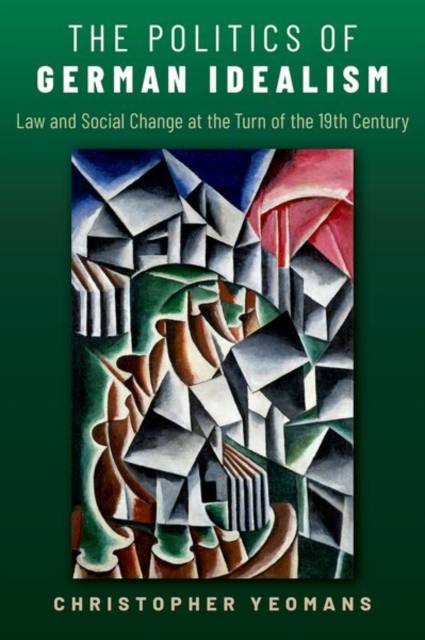
The Politics of German Idealism reconstructs the political philosophies of Kant, Fichte and Hegel against the background of their social-historical context. Christopher Yeomans' guiding thought is to understand German Idealist political philosophy as political, i.e., as a set of policy options and institutional designs aimed at a broadly but distinctively German set of social problems. 'Political' here refers to use of the state's power to enforce law, and 'social' to the norms and groups which are regulated by that enforcement, but which also antedate or exceed that enforcement. Because the power to enforce law is very much still being actualized by state-building in the period at issue, 'political' refers quite narrowly to a certain kind of practical legal project rather than to a perennial set of problems from the history of philosophy. By way of method, Yeomans claims that to reveal the political nature of German Idealist political philosophy requires understanding German Idealism as both taking place in and conceptualizing its own historical present--this is the sense in which it is not only political, but political philosophy. The most important general feature of the historical present of the German Idealists is the way in which the period from 1770 to 1830 was a transitional period between early and late modernity, a so-called saddle period (Sattelzeit) in which the metaphor is of a Bergsattel or shallow valley between two mountain peaks.
Specificaties
Betrokkenen
- Auteur(s):
- Uitgeverij:
Inhoud
- Aantal bladzijden:
- 244
- Taal:
- Engels
Eigenschappen
- Productcode (EAN):
- 9780197667309
- Verschijningsdatum:
- 9/06/2023
- Uitvoering:
- Hardcover
- Formaat:
- Genaaid
- Afmetingen:
- 162 mm x 237 mm
- Gewicht:
- 512 g



Alleen bij Standaard Boekhandel
+ 283 punten op je klantenkaart van Standaard Boekhandel
Cadeau

AANGERADEN


Beoordelingen
We publiceren alleen reviews die voldoen aan de voorwaarden voor reviews. Bekijk onze voorwaarden voor reviews.