


- Afhalen na 1 uur in een winkel met voorraad
- Gratis thuislevering in België vanaf € 30
- Ruim aanbod met 7 miljoen producten
- Afhalen na 1 uur in een winkel met voorraad
- Gratis thuislevering in België vanaf € 30
- Ruim aanbod met 7 miljoen producten





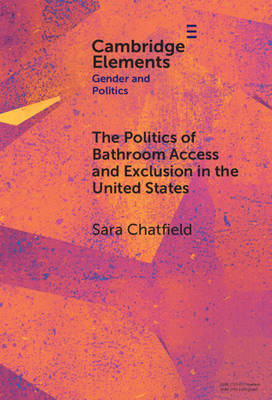
The Politics of Bathroom Access and Exclusion in the United States
Sara Chatfield
€ 124,45
+ 248 punten
Uitvoering
Omschrijving
The past twenty years have seen an explosion of state laws focused on bathroom access, including laws that both restrict and expand the ability of people to access basic needs in public. Through an analysis of several distinct state-level policies that regulate bathrooms along the dimensions of gender and gender roles, gender identity, and disability, the author argues that bathroom access is an important aspect of citizenship, signaling both physical and symbolic exclusion and inclusion. Social citizenship requires that individuals and groups be able to fully take part in the public sphere, yet denying toilet access means that individuals can only exist in public for as long as they can 'hold it.' Thus, ensuring equal access to bathrooms - or denying it to targeted groups - becomes a powerful way for society to define who is a full citizen and to indicate who belongs and who doesn't in public spaces.
Specificaties
Betrokkenen
- Auteur(s):
- Uitgeverij:
Inhoud
- Aantal bladzijden:
- 84
- Taal:
- Engels
- Reeks:
Eigenschappen
- Productcode (EAN):
- 9781009539562
- Verschijningsdatum:
- 5/12/2024
- Uitvoering:
- Hardcover
- Formaat:
- Genaaid
- Afmetingen:
- 152 mm x 229 mm
- Gewicht:
- 285 g


Alleen bij Standaard Boekhandel
+ 248 punten op je klantenkaart van Standaard Boekhandel
Cadeau

AANGERADEN


Beoordelingen
We publiceren alleen reviews die voldoen aan de voorwaarden voor reviews. Bekijk onze voorwaarden voor reviews.