


- Afhalen na 1 uur in een winkel met voorraad
- Gratis thuislevering in België vanaf € 30
- Ruim aanbod met 7 miljoen producten
- Afhalen na 1 uur in een winkel met voorraad
- Gratis thuislevering in België vanaf € 30
- Ruim aanbod met 7 miljoen producten





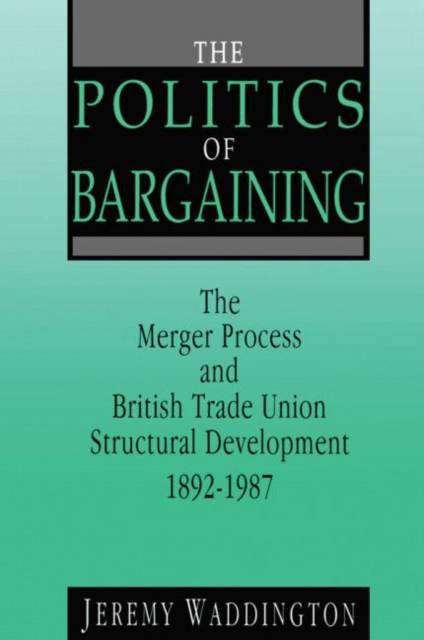
The Politics of Bargaining
Merger Process and British Trade Union Structural Development, 1892-1987
Jeremy Waddington
Hardcover | Engels
€ 206,45
+ 412 punten
Omschrijving
Tracing developments in British trade union structure over almost 100 years with specific reference to the merger process, this book shows how the underlying processes of change are cyclical. It therefore provides a backdrop for understanding some of the options for structural change that may be adopted by trade unions in the future. Establishing a framework within which the historical development of the merger process may be understood, the book identifies three central sets of relationships: the bargaining position of unions relative to employers and the state; the bargaining position of a union relative to competitor unions; and factional bargaining within unions. Collectively, the three relationships are referred to as the politics of bargaining and are used to explain changes in the rate and character of trade union structural development.
Specificaties
Betrokkenen
- Auteur(s):
- Uitgeverij:
Inhoud
- Aantal bladzijden:
- 272
- Taal:
- Engels
Eigenschappen
- Productcode (EAN):
- 9780720122459
- Verschijningsdatum:
- 28/09/1995
- Uitvoering:
- Hardcover
- Formaat:
- Genaaid
- Afmetingen:
- 152 mm x 229 mm
- Gewicht:
- 535 g



Alleen bij Standaard Boekhandel
+ 412 punten op je klantenkaart van Standaard Boekhandel
AANGERADEN


Beoordelingen
We publiceren alleen reviews die voldoen aan de voorwaarden voor reviews. Bekijk onze voorwaarden voor reviews.