


- Afhalen na 1 uur in een winkel met voorraad
- Gratis thuislevering in België vanaf € 30
- Ruim aanbod met 7 miljoen producten
- Afhalen na 1 uur in een winkel met voorraad
- Gratis thuislevering in België vanaf € 30
- Ruim aanbod met 7 miljoen producten





€ 48,95
+ 97 punten
Omschrijving
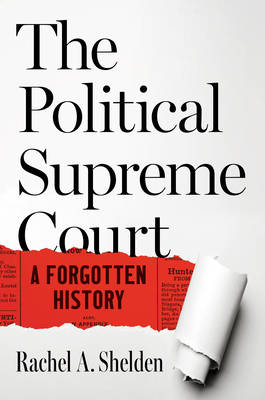
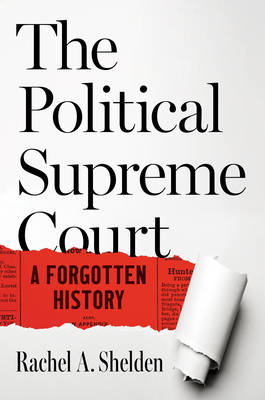
Today's Supreme Court justices bristle at the label "politicians in robes," insisting that they operate above the fray of partisan politics. But for the first century of the nation's history, the Court was unmistakably a political institution, both by design and in practice. Justices were fully expected to engage in partisan politics--there was no concern that such engagement would lead to corruption or undue bias--and they remained deeply involved in civic debate and the electoral process while on the bench. In addition to hearing cases in the capital, each justice spent much of his time "riding circuit" and presiding over federal trial courts. On circuit and in Washington, nineteenth-century justices wrote for partisan newspapers, drafted legislation, advised partisan allies, campaigned for colleagues, and even ran for political offices from the bench. Through these political interactions, members of the Court helped shape debates about the Constitution's meaning at a time when most Americans did not believe in judicial supremacy.
In this sweeping history, Rachel A. Shelden, one of America's leading voices on the history of the Court, brings readers inside the social and political world of its justices, recovering their essential role in the era's turbulent politics. She also charts shifts at the turn of the twentieth century, when members of the Court and the legal community refashioned the judiciary as an apolitical institution, setting the stage for an increasingly more powerful--and more isolated--modern Court. The Political Supreme Court is required reading for anyone interested in the legal and political underpinnings of today's judicial power.
In this sweeping history, Rachel A. Shelden, one of America's leading voices on the history of the Court, brings readers inside the social and political world of its justices, recovering their essential role in the era's turbulent politics. She also charts shifts at the turn of the twentieth century, when members of the Court and the legal community refashioned the judiciary as an apolitical institution, setting the stage for an increasingly more powerful--and more isolated--modern Court. The Political Supreme Court is required reading for anyone interested in the legal and political underpinnings of today's judicial power.
Specificaties
Betrokkenen
- Auteur(s):
- Uitgeverij:
Inhoud
- Aantal bladzijden:
- 440
- Taal:
- Engels
- Reeks:
Eigenschappen
- Productcode (EAN):
- 9781469697130
- Verschijningsdatum:
- 27/10/2026
- Uitvoering:
- Hardcover
- Formaat:
- Genaaid
- Afmetingen:
- 155 mm x 235 mm


Alleen bij Standaard Boekhandel
+ 97 punten op je klantenkaart van Standaard Boekhandel
Cadeau

AANGERADEN


Beoordelingen
We publiceren alleen reviews die voldoen aan de voorwaarden voor reviews. Bekijk onze voorwaarden voor reviews.