


- Afhalen na 1 uur in een winkel met voorraad
- Gratis thuislevering in België vanaf € 30
- Ruim aanbod met 7 miljoen producten
- Afhalen na 1 uur in een winkel met voorraad
- Gratis thuislevering in België vanaf € 30
- Ruim aanbod met 7 miljoen producten





€ 66,45
+ 132 punten
Omschrijving
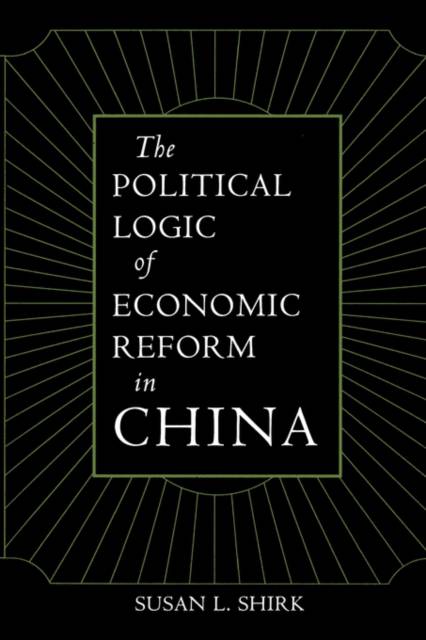
In the past decade, China was able to carry out economic reform without political reform, while the Soviet Union attempted the opposite strategy. How did China succeed at economic market reform without changing communist rule? Susan Shirk shows that Chinese communist political institutions are more flexible and less centralized than their Soviet counterparts were.
Shirk pioneers a rational choice institutional approach to analyze policy-making in a non-democratic authoritarian country and to explain the history of Chinese market reforms from 1979 to the present. Drawing on extensive interviews with high-level Chinese officials, she pieces together detailed histories of economic reform policy decisions and shows how the political logic of Chinese communist institutions shaped those decisions.
Combining theoretical ambition with the flavor of on-the-ground policy-making in Beijing, this book is a major contribution to the study of reform in China and other communist countries.
Shirk pioneers a rational choice institutional approach to analyze policy-making in a non-democratic authoritarian country and to explain the history of Chinese market reforms from 1979 to the present. Drawing on extensive interviews with high-level Chinese officials, she pieces together detailed histories of economic reform policy decisions and shows how the political logic of Chinese communist institutions shaped those decisions.
Combining theoretical ambition with the flavor of on-the-ground policy-making in Beijing, this book is a major contribution to the study of reform in China and other communist countries.
Specificaties
Betrokkenen
- Auteur(s):
- Uitgeverij:
Inhoud
- Aantal bladzijden:
- 412
- Taal:
- Engels
- Reeks:
- Reeksnummer:
- nr. 24
Eigenschappen
- Productcode (EAN):
- 9780520077072
- Verschijningsdatum:
- 5/08/1993
- Uitvoering:
- Paperback
- Formaat:
- Trade paperback (VS)
- Afmetingen:
- 153 mm x 227 mm
- Gewicht:
- 594 g


Alleen bij Standaard Boekhandel
+ 132 punten op je klantenkaart van Standaard Boekhandel
CADEAU

AANGERADEN


Beoordelingen
We publiceren alleen reviews die voldoen aan de voorwaarden voor reviews. Bekijk onze voorwaarden voor reviews.