


- Afhalen na 1 uur in een winkel met voorraad
- Gratis thuislevering in België vanaf € 30
- Ruim aanbod met 7 miljoen producten
- Afhalen na 1 uur in een winkel met voorraad
- Gratis thuislevering in België vanaf € 30
- Ruim aanbod met 7 miljoen producten





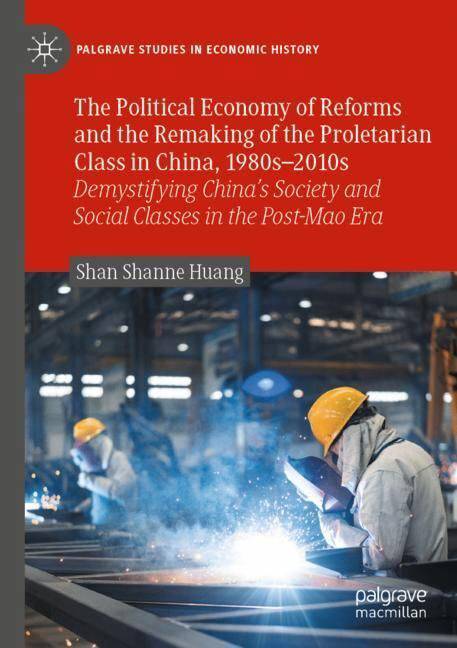
The Political Economy of Reforms and the Remaking of the Proletarian Class in China, 1980s-2010s
Demystifying China's Society and Social Classes in the Post-Mao Era
Shan Shanne Huang
€ 140,95
+ 281 punten
Uitvoering
Omschrijving
This book comprehensively investigates the position of China's working class between the 1980s and 2010s and considers the consequences of economic reforms in historical perspective. It argues the case that, far from the illusion during the Maoist period that a new society had been established where the working classes held greater political and economic autonomy, economic reforms in the post-Mao era have led to the return of traditional Marxist proletariats in China. The book demonstrates how the reforms of Deng Xiaoping have led to increased economic efficiency at the expense of economic equality through an extensive case study of an SOE (state-owned enterprise) in Sichuan Province as well as wider discussions of the emergence of state capitalism on both a micro and macroeconomic level. The book also discusses workers' protests during these periods of economic reform to reflect the reformation of class consciousness in post-Mao China, drawing on Marx's concept of a transition from a'class-in-itself' to a 'class-for-itself'. It will be valuable reading for students and scholars of Chinese economic and social history, as well as political economy, sociology, and politics.
Specificaties
Betrokkenen
- Auteur(s):
- Uitgeverij:
Inhoud
- Aantal bladzijden:
- 276
- Taal:
- Engels
- Reeks:
Eigenschappen
- Productcode (EAN):
- 9783031204579
- Verschijningsdatum:
- 20/01/2024
- Uitvoering:
- Paperback
- Formaat:
- Trade paperback (VS)
- Afmetingen:
- 148 mm x 210 mm
- Gewicht:
- 390 g


Alleen bij Standaard Boekhandel
+ 281 punten op je klantenkaart van Standaard Boekhandel
Cadeau

AANGERADEN


Beoordelingen
We publiceren alleen reviews die voldoen aan de voorwaarden voor reviews. Bekijk onze voorwaarden voor reviews.