


- Afhalen na 1 uur in een winkel met voorraad
- Gratis thuislevering in België vanaf € 30
- Ruim aanbod met 7 miljoen producten
- Afhalen na 1 uur in een winkel met voorraad
- Gratis thuislevering in België vanaf € 30
- Ruim aanbod met 7 miljoen producten





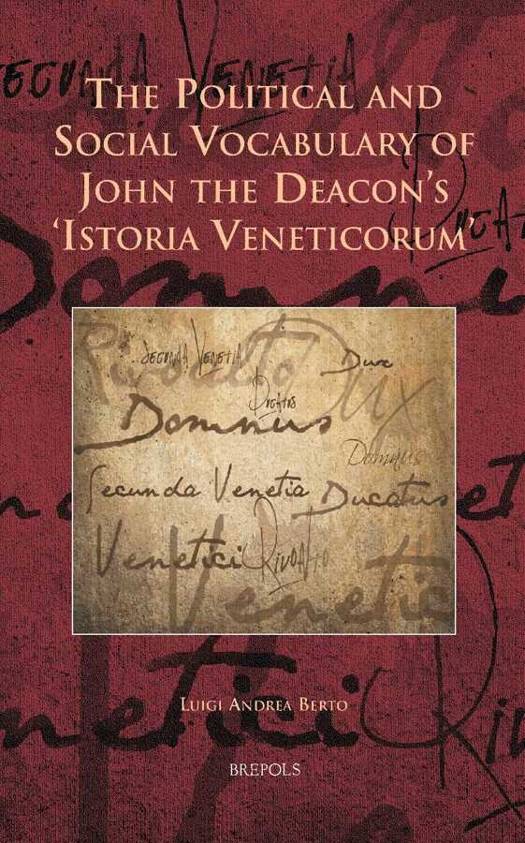
The Political and Social Vocabulary of John the Deacon's 'Istoria Veneticorum'
Luigi A Berto
€ 90,10
+ 180 punten
Omschrijving
The Istoria Veneticorum, a chronicle attributed to John the Deacon, chaplain and ambassador of the Venetian Duke Peter Orseolo II (991-1008), is of fundamental importance for the reconstruction of early medieval Venetian history. In addition to being the only historical narrative of that period, it covers the entire early Middle Ages, from the invasion of the Lombards in 569, an action that forced a part of the Veneto's population to seek refuge on the islands of the Venetian lagoon, to the beginning of the eleventh century. Its importance is further emphasized by the limited number of the surviving early medieval Venetian sources. Berto's study of the political and social vocabulary of this work analyses the chronicler's use and contextualization of key words and provides the reader with an enhanced understanding of the Istoria Veneticorum. The attentive and skilful use of terminology by the chronicler confirms that the author was, in all likelihood, a member of the Orseolo entourage, that he was acquainted with the art of diplomacy, and that he was, in fact, John the Deacon. Furthermore, he did not limit himself to a mere recording of dates and events; rather, by a careful use of terminology-probably in order to avoid reopening recent wounds-he was able to express his opinions about the dukes who had ruled his country.
Specificaties
Betrokkenen
- Auteur(s):
- Uitgeverij:
Inhoud
- Aantal bladzijden:
- 280
- Taal:
- Engels
- Reeks:
- Reeksnummer:
- nr. 12
Eigenschappen
- Productcode (EAN):
- 9782503531595
- Verschijningsdatum:
- 25/06/2013
- Uitvoering:
- Hardcover
- Formaat:
- Genaaid
- Gewicht:
- 738 g


Alleen bij Standaard Boekhandel
+ 180 punten op je klantenkaart van Standaard Boekhandel
Cadeau

AANGERADEN


Beoordelingen
We publiceren alleen reviews die voldoen aan de voorwaarden voor reviews. Bekijk onze voorwaarden voor reviews.