


- Afhalen na 1 uur in een winkel met voorraad
- Gratis thuislevering in België vanaf € 30
- Ruim aanbod met 7 miljoen producten
- Afhalen na 1 uur in een winkel met voorraad
- Gratis thuislevering in België vanaf € 30
- Ruim aanbod met 7 miljoen producten





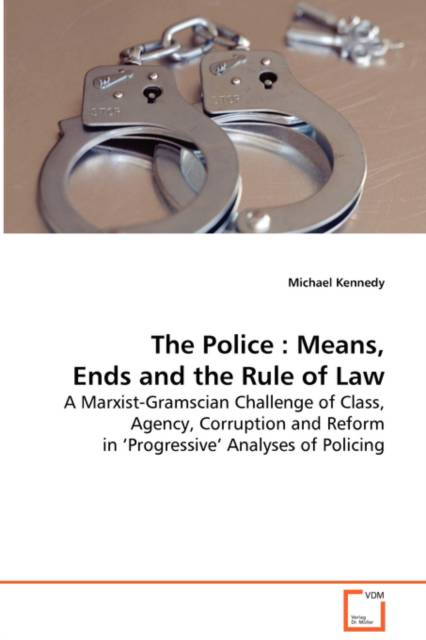
The Police : Means, Ends and the Rule of Law
A Marxist-Gramscian Challenge of Class, Agency, Corruption and Reform in 'Progressive' Analyses of Policing
Michael Kennedy
Paperback | Engels
€ 110,45
+ 220 punten
Omschrijving
This work about policing institutions uses the worksof Marx, Engels and Gramsci. The work argues thatachieving a new common sense and a new social orderrequires the development of a counter hegemony.This requires a consciousness that developsorganically from within the working class.In this process 'progressive'intellectuals,journalists and politicians act as 'subalterns'ofthe state by creating a 'moral panic' regardingcorruption within policing institutions.Subsequently the wider spread of corruptionwithin criminal justice systems is ignored.Operational police are presented as class enemiesand denied membership of their class. Criticsargue the discretionary edge of the 'Rule of Law'should be applied to the policed. Yet theenforcement aspects should govern any policing ofthe police. Subsequently the deep seated structuraland alienating factors that cause resistance,misconduct and corruption amongst rank and filepolice are ignored. Whilst accountability is reducedto neo-liberal reform concepts of agency, choice andindividual responsibility.
Specificaties
Betrokkenen
- Auteur(s):
- Uitgeverij:
Inhoud
- Aantal bladzijden:
- 364
- Taal:
- Engels
Eigenschappen
- Productcode (EAN):
- 9783639082142
- Verschijningsdatum:
- 15/09/2008
- Uitvoering:
- Paperback
- Afmetingen:
- 150 mm x 22 mm
- Gewicht:
- 558 g


Alleen bij Standaard Boekhandel
+ 220 punten op je klantenkaart van Standaard Boekhandel
Cadeau

AANGERADEN


Beoordelingen
We publiceren alleen reviews die voldoen aan de voorwaarden voor reviews. Bekijk onze voorwaarden voor reviews.