


- Afhalen na 1 uur in een winkel met voorraad
- Gratis thuislevering in België vanaf € 30
- Ruim aanbod met 7 miljoen producten
- Afhalen na 1 uur in een winkel met voorraad
- Gratis thuislevering in België vanaf € 30
- Ruim aanbod met 7 miljoen producten





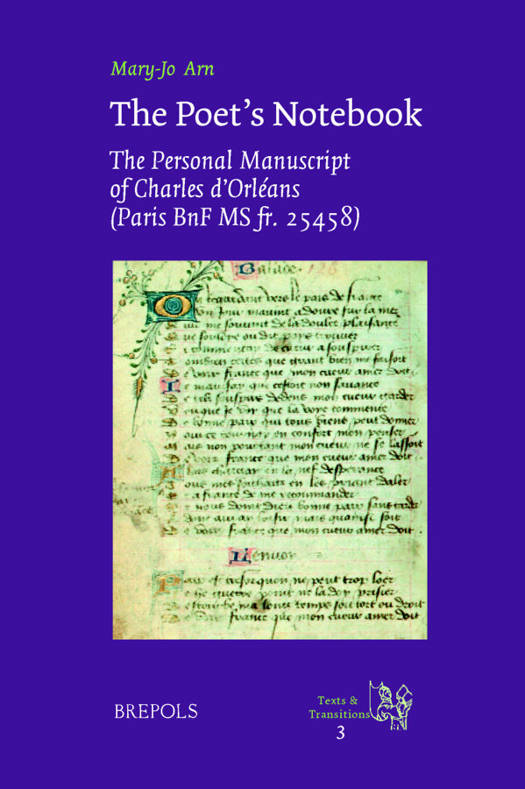
The Poet's Notebook
The Personal Manuscript of Charles d'Orléans (Paris, BnF MS fr. 25458)
Mary-Jo Arn
€ 90,10
+ 180 punten
Omschrijving
This study of Charles d'Orleans's personal manuscript of his poetry - the first in nearly a century - paves the way not only for a new edition of the duke's oeuvre (by Mary-Jo Arn, John Fox, and R. Barton Palmer) but for a new view of it. Following the first complete modern description of the manuscript, this study reconstructs the history of the manuscript, copying layer by copying layer. Codicological observations supplemented with palaeographical, historical, art-historical, and textual information reveal the approximate sequence of the manuscript's composition, which in turn allows a re-dating of the manuscript and some of the poems in it. Charles saw lyric form differently than did his predecessors and contemporaries, a view made manifest in the poet's own numbering of his poems. He mixed his complaintes with ballades and his rondels with chansons, each pair of forms in a numbered series, but never presenting the longer alongside the shorter forms. The analysis of the manuscript's construction corrects the current physical disorder of the later chansons and rondels, as well as that of the 'En la forest de longue actente' series (including the lyric omitted from the standard edition) and re-evaluates the handful of English poems in the manuscript. In the end, we come to understand the relationship between the visual 'messiness' of the manuscript and the poet's strong concept of lyric order. The technical aspects of the study are clarified by many tables and fascimile pages; the interactive CD contains an index of first lines that can be sorted in various ways to reveal a variety of kinds of manuscript relationships.
Specificaties
Betrokkenen
- Auteur(s):
- Uitgeverij:
Inhoud
- Aantal bladzijden:
- 202
- Taal:
- Frans
- Reeks:
- Reeksnummer:
- nr. 3
Eigenschappen
- Productcode (EAN):
- 9782503520704
- Verschijningsdatum:
- 15/01/2009
- Uitvoering:
- Hardcover
- Afmetingen:
- 165 mm x 244 mm
- Gewicht:
- 566 g


Alleen bij Standaard Boekhandel
+ 180 punten op je klantenkaart van Standaard Boekhandel
Cadeau

AANGERADEN


Beoordelingen
We publiceren alleen reviews die voldoen aan de voorwaarden voor reviews. Bekijk onze voorwaarden voor reviews.