


- Afhalen na 1 uur in een winkel met voorraad
- Gratis thuislevering in België vanaf € 30
- Ruim aanbod met 7 miljoen producten
- Afhalen na 1 uur in een winkel met voorraad
- Gratis thuislevering in België vanaf € 30
- Ruim aanbod met 7 miljoen producten





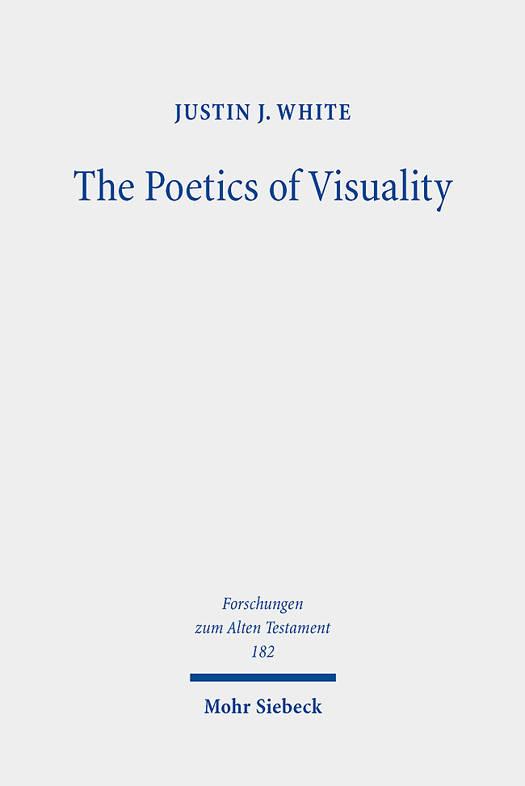
The Poetics of Visuality
Ekphrasis, Material Agency, and the Visual Imagination in Biblical Antiquity
Justin J White
€ 135,95
+ 271 punten
Omschrijving
Justin J. White explores the nature of images in ancient Israel through a reconceptualization of the relationship between image and text. He proposes that in ancient Israel, texts evoked images as a core part of their rhetoric. Rather than conceptualizing texts and images as ontologically or functionally distinct media, he argues that both media are mixed media even while neither medium is reducible to the other. In order to make this argument, he focuses on the visual aspects of textual rhetoric-what he terms "the poetics of visuality." He builds his argument across three text-specific axes of visual rhetoric: ekphrasis, the visual imagination, and material agency. He makes the claim that each of these three axes are endemic to Israelite literature, and mutually contribute to the formation of a robust ontology of visual representation in ancient Israel.
Specificaties
Betrokkenen
- Auteur(s):
- Uitgeverij:
Inhoud
- Aantal bladzijden:
- 294
- Taal:
- Engels
- Reeks:
Eigenschappen
- Productcode (EAN):
- 9783161633447
- Verschijningsdatum:
- 1/11/2024
- Uitvoering:
- Hardcover
- Formaat:
- Genaaid
- Afmetingen:
- 231 mm x 155 mm
- Gewicht:
- 585 g


Alleen bij Standaard Boekhandel
+ 271 punten op je klantenkaart van Standaard Boekhandel

Beoordelingen
We publiceren alleen reviews die voldoen aan de voorwaarden voor reviews. Bekijk onze voorwaarden voor reviews.