


- Afhalen na 1 uur in een winkel met voorraad
- Gratis thuislevering in België vanaf € 30
- Ruim aanbod met 7 miljoen producten
- Afhalen na 1 uur in een winkel met voorraad
- Gratis thuislevering in België vanaf € 30
- Ruim aanbod met 7 miljoen producten




€ 4,99
+ 4 punten
Omschrijving
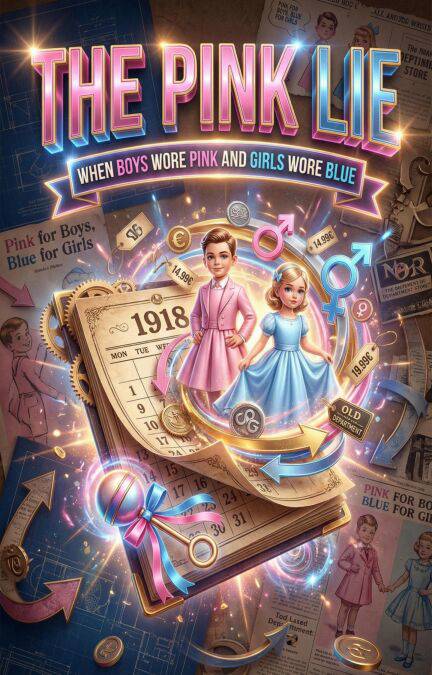
"The Pink Lie – When boys wore pink and girls wore blue" overturns our deepest assumptions about gender colors. Today, pink is for girls and blue is for boys. But this book reveals that until the 1940s, the opposite was true. Trade publications from 1918 explicitly stated: "The generally accepted rule is pink for the boys, and blue for the girls."
Sociologist Sarah Rose explains the logic: Pink was seen as a stronger, more decided color (a derivative of warlike red) and thus suitable for boys, while blue was considered delicate and dainty (associated with the Virgin Mary), fitting for girls.
"The Pink Lie" traces how a marketing push by US department stores flipped the script to sell more clothes, proving that our "biological" preferences are actually just the result of a mid-century advertising campaign. It is a fascinating history of how corporate interests construct our identity before we are even born.
Sociologist Sarah Rose explains the logic: Pink was seen as a stronger, more decided color (a derivative of warlike red) and thus suitable for boys, while blue was considered delicate and dainty (associated with the Virgin Mary), fitting for girls.
"The Pink Lie" traces how a marketing push by US department stores flipped the script to sell more clothes, proving that our "biological" preferences are actually just the result of a mid-century advertising campaign. It is a fascinating history of how corporate interests construct our identity before we are even born.
Specificaties
Betrokkenen
- Auteur(s):
- Uitgeverij:
Inhoud
- Aantal bladzijden:
- 172
- Taal:
- Engels
Eigenschappen
- Productcode (EAN):
- 9783565203390
- Verschijningsdatum:
- 27/01/2026
- Uitvoering:
- E-book
- Formaat:
- ePub


Alleen bij Standaard Boekhandel
+ 4 punten op je klantenkaart van Standaard Boekhandel
Cadeau

AANGERADEN


Beoordelingen
We publiceren alleen reviews die voldoen aan de voorwaarden voor reviews. Bekijk onze voorwaarden voor reviews.