



Bedankt voor het vertrouwen het afgelopen jaar! Om jou te bedanken bieden we GRATIS verzending (in België) aan op alles gedurende de hele maand januari.
- Afhalen na 1 uur in een winkel met voorraad
- In januari gratis thuislevering in België
- Ruim aanbod met 7 miljoen producten
Bedankt voor het vertrouwen het afgelopen jaar! Om jou te bedanken bieden we GRATIS verzending (in België) aan op alles gedurende de hele maand januari.
- Afhalen na 1 uur in een winkel met voorraad
- In januari gratis thuislevering in België
- Ruim aanbod met 7 miljoen producten





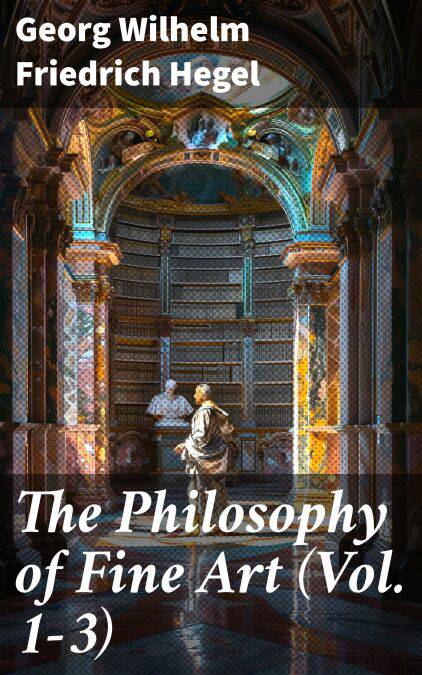
The Philosophy of Fine Art (Vol. 1-3) E-BOOK
Complete Edition
Georg Wilhelm Friedrich Hegel
E-book | Engels
€ 1,49
+ 1 punten
Omschrijving
In "The Philosophy of Fine Art," Georg Wilhelm Friedrich Hegel delves into the intricate relationship between art, philosophy, and the unfolding of human spirit. Spanning three volumes, Hegel articulates a comprehensive framework that positions art as a manifestation of the Absolute Spirit, evolving through historical contexts and aesthetic paradigms. His dialectical method, characterized by a synthesis of opposing ideas, presents art not merely as an object but as a dynamic process that reflects the cultural and intellectual milieu of its time. Hegel's prose, while dense and philosophical, is imbued with a passion for art that invites readers to explore the depths of beauty and meaning within cultural artifacts. Hegel, an influential German philosopher and a key figure in German Idealism, emerged from a background steeped in history, theology, and metaphysics, which profoundly shaped his thoughts on aesthetic theory. His intellectual journey through the tumultuous political landscape of early 19th-century Europe also fed into his contemplation of art's role in societal development. Experiencing various forms of art from classical to contemporary, Hegel's observations are suffused with a belief in art's capacity to express the ethical life of its time. This seminal work is essential for both students and scholars of philosophy and the arts, providing a rich, philosophical explorative ground for understanding the evolution of aesthetics. Readers seeking to unravel the complexities of art's significance within human culture will find Hegel's profound insights a compelling and transformative experience.
Specificaties
Betrokkenen
- Auteur(s):
- Vertaler(s):
- Uitgeverij:
Inhoud
- Aantal bladzijden:
- 1368
- Taal:
- Engels
Eigenschappen
- Productcode (EAN):
- 8596547776352
- Verschijningsdatum:
- 12/12/2023
- Uitvoering:
- E-book
- Beveiligd met:
- Digital watermarking
- Formaat:
- ePub


Alleen bij Standaard Boekhandel
+ 1 punten op je klantenkaart van Standaard Boekhandel
SOLDEN


Beoordelingen
We publiceren alleen reviews die voldoen aan de voorwaarden voor reviews. Bekijk onze voorwaarden voor reviews.