


- Afhalen na 1 uur in een winkel met voorraad
- Gratis thuislevering in België vanaf € 30
- Ruim aanbod met 7 miljoen producten
- Afhalen na 1 uur in een winkel met voorraad
- Gratis thuislevering in België vanaf € 30
- Ruim aanbod met 7 miljoen producten





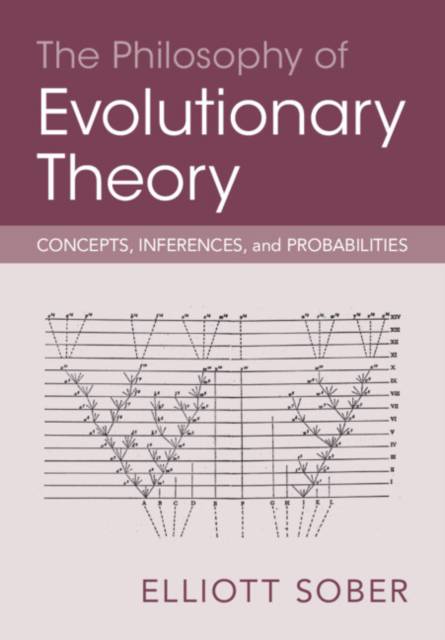
The Philosophy of Evolutionary Theory
Concepts, Inferences, and Probabilities
Elliott Sober
Paperback | Engels
€ 32,95
+ 65 punten
Uitvoering
Omschrijving
Natural selection, mutation, and adaptation are well-known and central topics in Darwin's theory of evolution and in the 20th - and 21st -century theories which grew out of it, but many other important topics are used in evolutionary biology that raise interesting philosophical questions. In this book, Elliott Sober analyses a much larger range of topics, including fitness, altruism, common ancestry, chance, taxonomy, phylogenetic inference, operationalism, reductionism, conventionalism, null hypotheses and default reasoning, instrumentalism versus realism, hypothetico-deductivism, essentialism, falsifiability, the principle of parsimony, the principle of the common cause, causality, determinism versus indeterminism, sensitivity to initial conditions, and the knowability of the past. Sober's clear philosophical analyses of these key concepts, arguments, and methods of inference will be valuable for all readers who want to understand evolutionary biology in both its Darwinian and its contemporary forms.
Specificaties
Betrokkenen
- Auteur(s):
- Uitgeverij:
Inhoud
- Aantal bladzijden:
- 308
- Taal:
- Engels
Eigenschappen
- Productcode (EAN):
- 9781009376013
- Verschijningsdatum:
- 8/02/2024
- Uitvoering:
- Paperback
- Formaat:
- Trade paperback (VS)
- Afmetingen:
- 170 mm x 244 mm
- Gewicht:
- 494 g


Alleen bij Standaard Boekhandel
+ 65 punten op je klantenkaart van Standaard Boekhandel
Cadeau

AANGERADEN


Beoordelingen
We publiceren alleen reviews die voldoen aan de voorwaarden voor reviews. Bekijk onze voorwaarden voor reviews.