


- Afhalen na 1 uur in een winkel met voorraad
- Gratis thuislevering in België vanaf € 30
- Ruim aanbod met 7 miljoen producten
- Afhalen na 1 uur in een winkel met voorraad
- Gratis thuislevering in België vanaf € 30
- Ruim aanbod met 7 miljoen producten





€ 41,95
+ 83 punten
Omschrijving
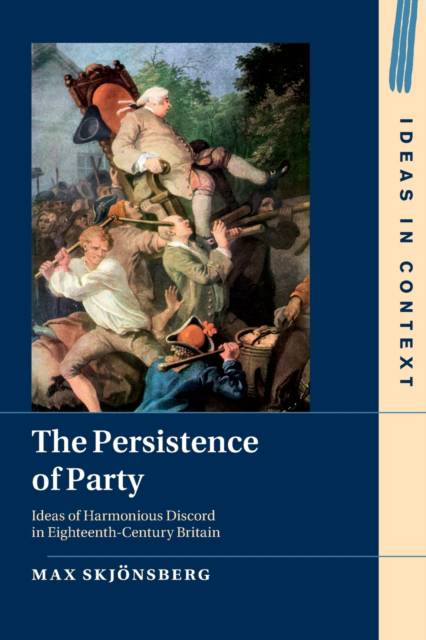
Political parties are taken for granted today, but how was the idea of party viewed in the eighteenth century, when core components of modern, representative politics were trialled? From Bolingbroke to Burke, political thinkers regarded party as a fundamental concept of politics, especially in the parliamentary system of Great Britain. The paradox of party was best formulated by David Hume: while parties often threatened the total dissolution of the government, they were also the source of life and vigour in modern politics. In the eighteenth century, party was usually understood as a set of flexible and evolving principles, associated with names and traditions, which categorised and managed political actors, voters, and commentators. Max Skjönsberg thus demonstrates that the idea of party as ideological unity is not purely a nineteenth- or twentieth-century phenomenon but can be traced to the eighteenth century.
Specificaties
Betrokkenen
- Auteur(s):
- Uitgeverij:
Inhoud
- Aantal bladzijden:
- 390
- Taal:
- Engels
- Reeks:
Eigenschappen
- Productcode (EAN):
- 9781108794992
- Verschijningsdatum:
- 15/12/2022
- Uitvoering:
- Paperback
- Formaat:
- Trade paperback (VS)
- Afmetingen:
- 152 mm x 229 mm
- Gewicht:
- 521 g


Alleen bij Standaard Boekhandel
+ 83 punten op je klantenkaart van Standaard Boekhandel
Cadeau

AANGERADEN


Beoordelingen
We publiceren alleen reviews die voldoen aan de voorwaarden voor reviews. Bekijk onze voorwaarden voor reviews.