


- Afhalen na 1 uur in een winkel met voorraad
- Gratis thuislevering in België vanaf € 30
- Ruim aanbod met 7 miljoen producten
- Afhalen na 1 uur in een winkel met voorraad
- Gratis thuislevering in België vanaf € 30
- Ruim aanbod met 7 miljoen producten





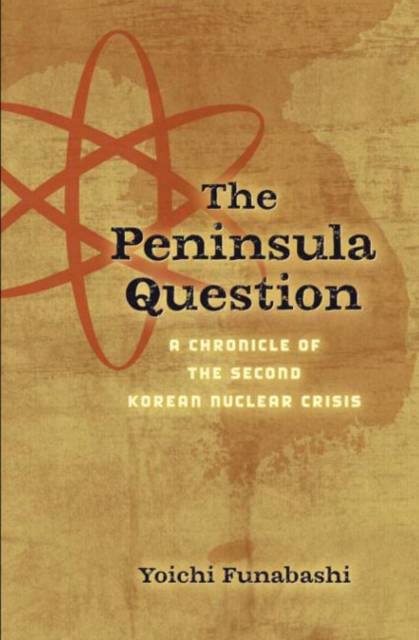
The Peninsula Question
A Chronicle of the Second Korean Nuclear Crisis
Yoichi Funabashi
Paperback | Engels
€ 76,45
+ 152 punten
Omschrijving
In October 2002 the United States confronted North Korea with suspicions that Pyongyang was enriching uranium in violation of the Agreed Framework that the nations had worked out during the Clinton administration. North Korea subsequently evicted international monitors and resumed its nuclear weapons program. The Peninsula Question chronicles the resulting second Korean nuclear crisis. Japanese journalist Yoichi Funabashi, informed by interviews with more than 160 diplomats and decision makers from China, Japan, Russia, South Korea, and the United States, provides a behind-the-scenes look at the negotiations to denuclearize the peninsula. Between 2002 and 2006, a series of top level diplomats, including the prime minister of Japan, attempted to engage with North Korea. Funabashi illustrates how the individual efforts of these major powers laid the groundwork for multilateral negotiations, first as the trilateral meeting and then as the Six-Party Talks. The first four rounds of talks (2003-2005) resulted in significant progress. Unfortunately, a lack of implementation after that breakthrough ultimately led to North Korea's missile tests in July and subsequent nuclear tests in October 2006. Th e Peninsula Question provides a window of understanding on the historical, geopolitical, and security concerns at play on the Korean peninsula since 2002. Offering multiple perspectives on the second Korean nuclear crisis, it describes more than just the U.S. and North Korean points of view. It pays special attention to China's dealings with North Korea, providing rare insights to into the decision-making processes of Beijing. This is an important, authoritative resource for understanding the crisis in Korea and diplomacy in Northeast Asia.
Specificaties
Betrokkenen
- Auteur(s):
- Uitgeverij:
Inhoud
- Aantal bladzijden:
- 608
- Taal:
- Engels
Eigenschappen
- Productcode (EAN):
- 9780815733843
- Verschijningsdatum:
- 31/10/2007
- Uitvoering:
- Paperback
- Formaat:
- Trade paperback (VS)
- Afmetingen:
- 152 mm x 229 mm
- Gewicht:
- 879 g


Alleen bij Standaard Boekhandel
+ 152 punten op je klantenkaart van Standaard Boekhandel
Cadeau

AANGERADEN


Beoordelingen
We publiceren alleen reviews die voldoen aan de voorwaarden voor reviews. Bekijk onze voorwaarden voor reviews.