


- Afhalen na 1 uur in een winkel met voorraad
- Gratis thuislevering in België vanaf € 30
- Ruim aanbod met 7 miljoen producten
- Afhalen na 1 uur in een winkel met voorraad
- Gratis thuislevering in België vanaf € 30
- Ruim aanbod met 7 miljoen producten





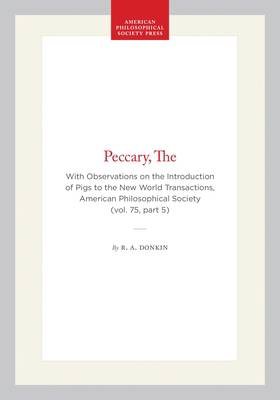
The Peccary
With Observations on the Introduction of Pigs to the New World, Transactions, American Philosophical Society (Vol. 75, Part 5)
R a Donkin
€ 48,95
+ 97 punten
Omschrijving
Three living species of peccary inhabit a vast area of the New World, between roughly 35 degrees of latitude north and south of the equator. They are primarily forest or woodland animals, but two species (one of them only recently discovered) have adapted to scrub-dominated ecosystems, both natural and anthropogenic. The overall distribution has contracted since the beginning of European seettlement, yet peccaries are remarkably resilient animals. In traditional societies, the peccary is hunted chiefly for meat, and within the combined distribution of the species probably no other animal has contributed more to human food supply. Europeans have valued both the meat and, on a much larger scale, the hides. This study discusses the distribution, habitat, and biology of the peccary and the peccary in human economy and society. Bibliography. Maps and illus.
Specificaties
Betrokkenen
- Auteur(s):
- Uitgeverij:
Inhoud
- Aantal bladzijden:
- 152
- Taal:
- Engels
- Reeks:
- Reeksnummer:
- nr. 576
Eigenschappen
- Productcode (EAN):
- 9780871697554
- Verschijningsdatum:
- 1/01/1985
- Uitvoering:
- Hardcover
- Formaat:
- Genaaid
- Afmetingen:
- 178 mm x 254 mm
- Gewicht:
- 503 g


Alleen bij Standaard Boekhandel
+ 97 punten op je klantenkaart van Standaard Boekhandel

Beoordelingen
We publiceren alleen reviews die voldoen aan de voorwaarden voor reviews. Bekijk onze voorwaarden voor reviews.