


- Afhalen na 1 uur in een winkel met voorraad
- Gratis thuislevering in België vanaf € 30
- Ruim aanbod met 7 miljoen producten
- Afhalen na 1 uur in een winkel met voorraad
- Gratis thuislevering in België vanaf € 30
- Ruim aanbod met 7 miljoen producten





€ 40,00
+ 80 punten
Omschrijving
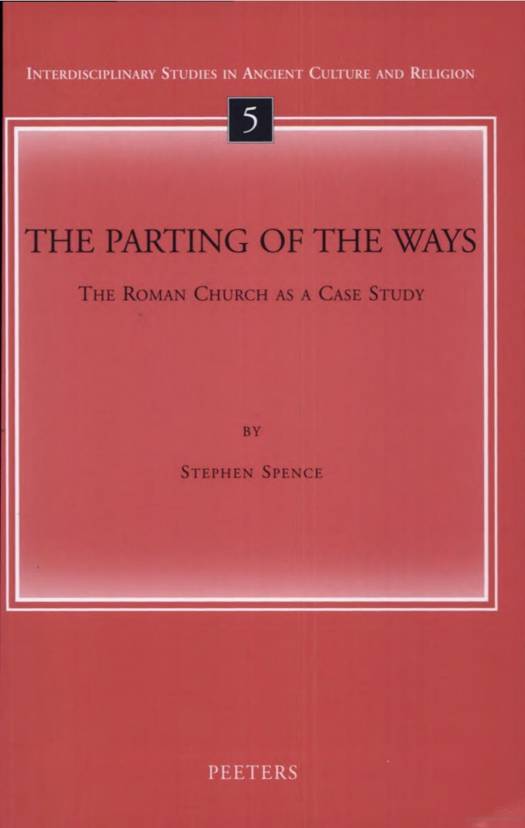
This book seeks to inject into the general discussion of the "Parting of the Ways" of Judaism and Christianity the social realities of the separation of a particular Christian community and a particular Jewish community. By drawing upon the literary and the historical data available concerning the church in Rome, Spence seeks to discover when and how Christians came to see themselves as an identifiably distinct community. His findings will surprise those who see the "Parting of the Ways" as a slow process. He argues that although the "parting" was early, it was not without its complications. Drawing upon the work of Rodney Stark, a sociologist of religion, Spence suggests that within the church in Rome there was a struggle between those who saw the church as a Jewish sect and those who saw the church as a Roman cult - a struggle already underway when the Apostle Paul wrote Romans. This struggle, however, was not an even one, because it was the cultists, those for whom the church's primary social location was the pagans of Rome, who held the positions of power over the numerically smaller sectarians who sought to maintain the church's primary identity as a Jewish sect acceptable within the synagogues of Rome.
Specificaties
Betrokkenen
- Auteur(s):
- Uitgeverij:
Inhoud
- Aantal bladzijden:
- 404
- Taal:
- Engels
- Reeks:
- Reeksnummer:
- nr. 5
Eigenschappen
- Productcode (EAN):
- 9789042913363
- Verschijningsdatum:
- 26/05/2004
- Uitvoering:
- Paperback
- Formaat:
- Trade paperback (VS)
- Afmetingen:
- 160 mm x 244 mm
- Gewicht:
- 666 g



Alleen bij Standaard Boekhandel
+ 80 punten op je klantenkaart van Standaard Boekhandel
Cadeau

AANGERADEN


Beoordelingen
We publiceren alleen reviews die voldoen aan de voorwaarden voor reviews. Bekijk onze voorwaarden voor reviews.