


- Afhalen na 1 uur in een winkel met voorraad
- Gratis thuislevering in België vanaf € 30
- Ruim aanbod met 7 miljoen producten
- Afhalen na 1 uur in een winkel met voorraad
- Gratis thuislevering in België vanaf € 30
- Ruim aanbod met 7 miljoen producten





€ 23,95
+ 47 punten
Omschrijving
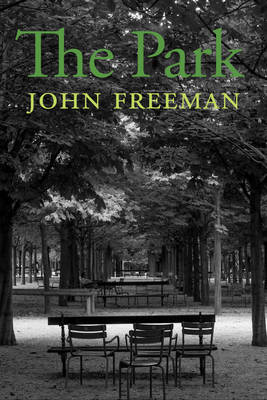
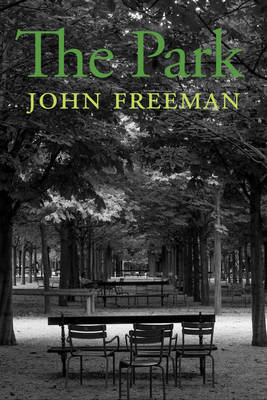
In The Park, his second book of poetry, John Freeman uses a park as a petri dish, turning a deep gaze on all that pass through it. In language both precise and restrained, Freeman explores the inherent contradictions that arise from a place whose purpose is derived purely from what we bring to it--a park is both natural and constructed, exclusionary and open, unfeeling and burdened with sentimentality. Pulling from both history and his own meditations in the Luxembourg Gardens in Paris, the seasons pass through famous parks, personal parks, parks beneath parks, and other spaces with fabricated outer limits. Throughout, Freeman wonders at how a park, being both curated and public, can be a nexus for a manifestation of great wealth inequality. How have we created these false boundaries for ourselves--with regard to physical space, but also in our minds and societies, in our personal relationships? Freeman plucks out difference in small daily dramas of people and animals only to dissolve it. Interspersed with meditations on love, beauty, and connection, The Park is a pacific and unflinching mirror cast upon a space defined by its transience.
Specificaties
Betrokkenen
- Auteur(s):
- Uitgeverij:
Inhoud
- Aantal bladzijden:
- 82
- Taal:
- Engels
Eigenschappen
- Productcode (EAN):
- 9781556595950
- Verschijningsdatum:
- 5/05/2020
- Uitvoering:
- Paperback
- Formaat:
- Trade paperback (VS)
- Afmetingen:
- 150 mm x 226 mm
- Gewicht:
- 158 g


Alleen bij Standaard Boekhandel
+ 47 punten op je klantenkaart van Standaard Boekhandel
Cadeau

AANGERADEN


Beoordelingen
We publiceren alleen reviews die voldoen aan de voorwaarden voor reviews. Bekijk onze voorwaarden voor reviews.