


- Afhalen na 1 uur in een winkel met voorraad
- Gratis thuislevering in België vanaf € 30
- Ruim aanbod met 7 miljoen producten
- Afhalen na 1 uur in een winkel met voorraad
- Gratis thuislevering in België vanaf € 30
- Ruim aanbod met 7 miljoen producten




€ 83,45
+ 166 punten
Omschrijving
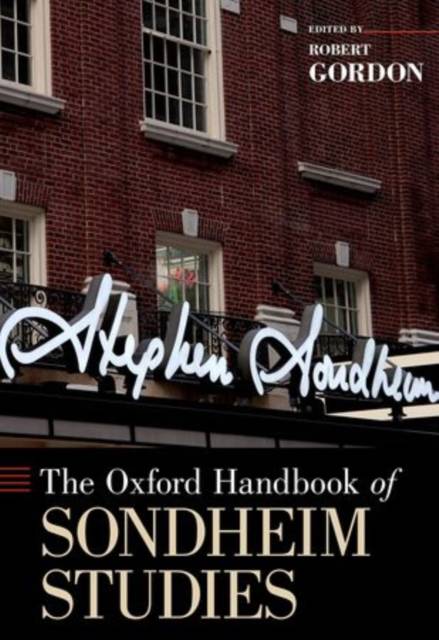
The Oxford Handbook of Sondheim Studies offers a series of cutting-edge essays on the most important and compelling topics in the growing field of Sondheim Studies. Focusing on broad groups of issues relating to the music and the production of Sondheim works, rather than on biographical questions about the composer himself, the handbook represents a cross-disciplinary introduction to comprehending Sondheim in musicological, theatrical, and socio-cultural terms. This collection of never-before published essays addresses issues of artistic method and musico-dramaturgical form, while at the same time offering close readings of individual shows from a variety of analytical perspectives. The handbook is arranged into six broad sections: issues of intertextuality and authorship; Sondheim's pioneering work in developing the non-linear form of the concept musical; the production history of Sondheim's work; his writing for film and television; his exploitation and deployment of a wide range of musical genres; and how interpretation through key critical lenses (including sociology, history, and feminist and queer theory) establishes his position in a broader cultural context.
Specificaties
Betrokkenen
- Auteur(s):
- Uitgeverij:
Inhoud
- Aantal bladzijden:
- 516
- Taal:
- Engels
- Reeks:
Eigenschappen
- Productcode (EAN):
- 9780190258191
- Verschijningsdatum:
- 1/06/2015
- Uitvoering:
- Paperback
- Formaat:
- Trade paperback (VS)
- Afmetingen:
- 168 mm x 241 mm
- Gewicht:
- 839 g


Alleen bij Standaard Boekhandel
+ 166 punten op je klantenkaart van Standaard Boekhandel
AANGERADEN


Beoordelingen
We publiceren alleen reviews die voldoen aan de voorwaarden voor reviews. Bekijk onze voorwaarden voor reviews.