


- Afhalen na 1 uur in een winkel met voorraad
- Gratis thuislevering in België vanaf € 30
- Ruim aanbod met 7 miljoen producten
- Afhalen na 1 uur in een winkel met voorraad
- Gratis thuislevering in België vanaf € 30
- Ruim aanbod met 7 miljoen producten




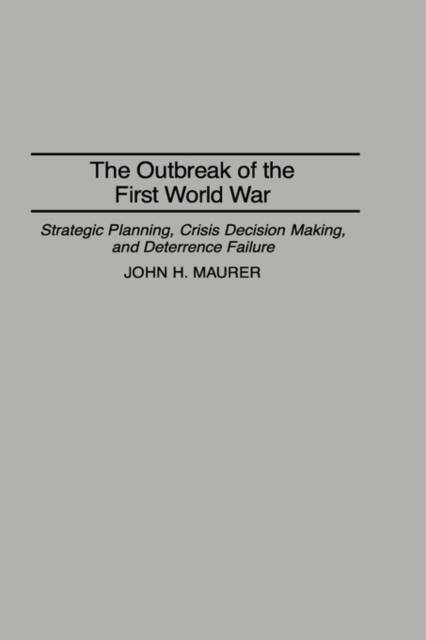
The Outbreak of the First World War
Strategic Planning, Crisis Decision Making, and Deterrence Failure
John H Maurer
€ 152,95
+ 305 punten
Omschrijving
This study examines what led the leaders of Austria-Hungary and Germany to launch major military offensives at the beginning of the First World War. The focus is on understanding why these two countries adopted high-risk offensive strategies during an international confrontation rather than a defensive military stance. The decision to attack or defend did not occur in a political vacuum. The leaders of Austria-Hungary and Germany adopted offensive strategies as a way to achieve their political ambitions. The offensives undertaken by Austria-Hungary and Germany in 1914 thus reflected their political goals as well as the strategic doctrines of war planners. The concluding chapter of this study explores why deterrence failed in 1914.
Specificaties
Betrokkenen
- Auteur(s):
- Uitgeverij:
Inhoud
- Aantal bladzijden:
- 168
- Taal:
- Engels
- Reeks:
Eigenschappen
- Productcode (EAN):
- 9780275949983
- Verschijningsdatum:
- 18/10/1995
- Uitvoering:
- Hardcover
- Formaat:
- Genaaid
- Afmetingen:
- 161 mm x 241 mm
- Gewicht:
- 444 g


Alleen bij Standaard Boekhandel
+ 305 punten op je klantenkaart van Standaard Boekhandel
Cadeau

AANGERADEN


Beoordelingen
We publiceren alleen reviews die voldoen aan de voorwaarden voor reviews. Bekijk onze voorwaarden voor reviews.