


- Afhalen na 1 uur in een winkel met voorraad
- Gratis thuislevering in België vanaf € 30
- Ruim aanbod met 7 miljoen producten
- Afhalen na 1 uur in een winkel met voorraad
- Gratis thuislevering in België vanaf € 30
- Ruim aanbod met 7 miljoen producten





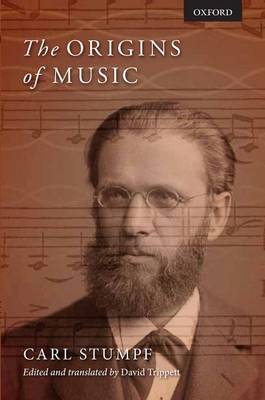
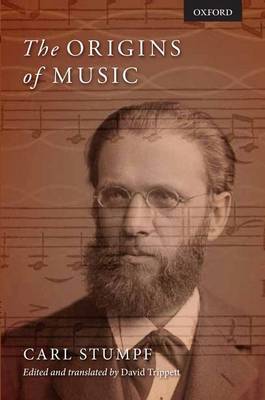
The Origins of Music
Carl Stumpf
€ 154,95
+ 309 punten
Omschrijving
The Origins of Music was first published in German in 1911. In this text Carl Stumpf set out a path-breaking hypothesis on the earliest musical sounds in human culture. Alongside his research in such diverse fields as classical philosophy, acoustics, and mathematics, Stumpf became one of the most influential psychologists of the late 19th century. He was the founding father of Gestalt psychology, and collaborated with William James, Edmund Husserl, and Wolfgang Köhler. This book was the culmination of more than 25 years of empirical and theoretical research in the field of music. In the first part, Stumpf discusses the origin and forms of musical activities as well as various existing theories on the origin of music, including those of Darwin, Rousseau, Herder, and Spencer. In the second part of the book, he summarizes his works on the historical development of instruments and music, and studies a putatively global range of music from non-European cultures to demonstrate the psychological principles of tonal organization, as well as providing a range of cross-cultural musical transcriptions and analyses. This became a foundation document for comparative musicology, the elder sibling to modern Ethnomusicology, and the book provides access to the original recordings Stumpf used in this process. The Origins of Music is available for the first time in the English language as a result of a collaboration between the European Society for the Cognitive Sciences of Music (ESCOM) and Oxford University Press. It is a fascinating volume for all those with an interest in the history of psychology and music. It appears here in tandem with Self-Portrait, Stumpf's autobiography of 1924, in which he outlines the rich life experiences behind his research career alongside his own explanation of his scientific and cultural legacy.
Specificaties
Betrokkenen
- Auteur(s):
- Vertaler(s):
- Uitgeverij:
Inhoud
- Aantal bladzijden:
- 282
- Taal:
- Engels
- Reeks:
Eigenschappen
- Productcode (EAN):
- 9780199695737
- Verschijningsdatum:
- 29/09/2012
- Uitvoering:
- Hardcover
- Formaat:
- Genaaid
- Afmetingen:
- 157 mm x 234 mm
- Gewicht:
- 639 g


Alleen bij Standaard Boekhandel
+ 309 punten op je klantenkaart van Standaard Boekhandel
Cadeau

AANGERADEN


Beoordelingen
We publiceren alleen reviews die voldoen aan de voorwaarden voor reviews. Bekijk onze voorwaarden voor reviews.