


- Afhalen na 1 uur in een winkel met voorraad
- Gratis thuislevering in België vanaf € 30
- Ruim aanbod met 7 miljoen producten
- Afhalen na 1 uur in een winkel met voorraad
- Gratis thuislevering in België vanaf € 30
- Ruim aanbod met 7 miljoen producten





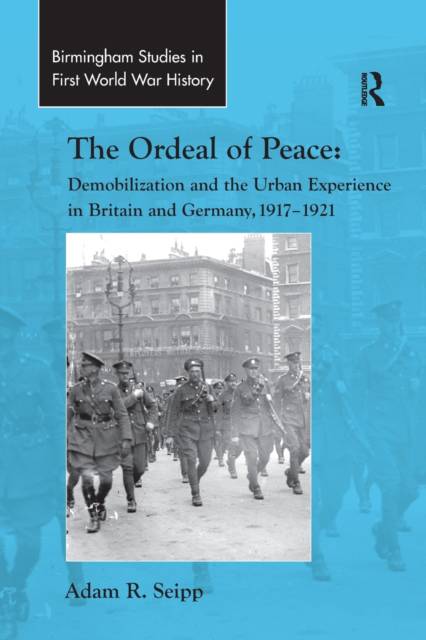
The Ordeal of Peace
Demobilization and the Urban Experience in Britain and Germany, 1917 1921
Adam R Seipp
€ 112,95
+ 225 punten
Uitvoering
Omschrijving
Historians know a great deal about how wars begin, but far less about how they end. Whilst much has been written about the forces, passions, and institutions that mobilized societies for war and worked to sustain that mobilization through years of struggle, much less is known about the equally complex processes that demobilized societies in the wake of armed conflict. As such, this new book will be welcomed by scholars wishing to understand the effects of the Great War in its fullest context, including the reactions, behaviors, and attitudes of 'ordinary' Europeans during the tumultuous events of the years of demobilization. Taking a transnational perspective on demobilization this study demonstrates that the experience of mass industrial war generated remarkably similar pressures within both the defeated and victorious countries. Using as examples the important provincial centres of Munich and Manchester, this book examines the experiences of European urban-dwellers from the last year of the war until the early 1920s. Utilizing a wide variety of sources from more than twenty archives in Germany, Britain, and the United States, this book recovers voices from the period that are often lost in conventional narratives, capturing the richness and diversity of the ideas, visions, and conflicts engendered by those difficult and tumultuous years. The result is a book that paints a vivid picture of the difficulties that peace could bring to economies and societies that had rapidly and fully adapted to the demands of industrial world war.
Specificaties
Betrokkenen
- Auteur(s):
- Uitgeverij:
Inhoud
- Aantal bladzijden:
- 308
- Taal:
- Engels
- Reeks:
Eigenschappen
- Productcode (EAN):
- 9781138265943
- Verschijningsdatum:
- 15/11/2016
- Uitvoering:
- Paperback
- Formaat:
- Trade paperback (VS)
- Afmetingen:
- 156 mm x 234 mm
- Gewicht:
- 435 g



Alleen bij Standaard Boekhandel
+ 225 punten op je klantenkaart van Standaard Boekhandel
Cadeau

AANGERADEN


Beoordelingen
We publiceren alleen reviews die voldoen aan de voorwaarden voor reviews. Bekijk onze voorwaarden voor reviews.