


- Afhalen na 1 uur in een winkel met voorraad
- Gratis thuislevering in België vanaf € 30
- Ruim aanbod met 7 miljoen producten
- Afhalen na 1 uur in een winkel met voorraad
- Gratis thuislevering in België vanaf € 30
- Ruim aanbod met 7 miljoen producten





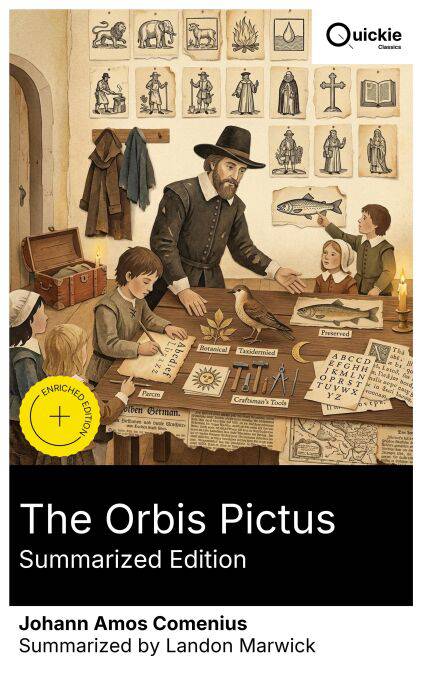
The Orbis Pictus (Summarized Edition) E-BOOK
Enriched edition. An Illustrated 17th-Century Learning Guide in Latin and the Vernacular, with Visual Methods for Children and Early Modern Pedagogy
Johann Amos Comenius
E-book | Engels
€ 0,49
Omschrijving
The Orbis Pictus (1658) guides novices through animals, elements, crafts, civic offices, and devotion via woodcuts and brief Latin-vernacular captions. Opening with sounds and letters, it moves from things to words, marrying image to concise prose so that seeing teaches reading. Both primer and small encyclopedia, it stands between Reformation schooling and seventeenth-century encyclopedism, launching the modern picture book and exemplifying object-based, sensory instruction. Johann Amos Comenius (Jan Amos Komensky), a Moravian Brethren bishop and itinerant reformer, wrote in exile amid the Thirty Years' War. His pansophic ideal - universal education grounded in things, not rote - shaped Janua Linguarum and the Didactica Magna and informs this book's multilingual, practical bent. Teaching across Bohemia and Poland, he crafted portable methods for mixed-language classrooms, marrying humane theology with crafts and nature so that knowledge could serve peaceable civic life. Students of education, language, and early modern culture will find this classic both lucid and usable. Read it as method as much as matter: a prototype of multimodal, humane learning that still clarifies debates on literacy, curriculum, and inclusivity.
Quickie Classics summarizes timeless works with precision, preserving the author's voice and keeping the prose clear, fast, and readable—distilled, never diluted. Enriched Edition extras: Introduction · Synopsis · Historical Context · Author Biography · Brief Analysis · 4 Reflection Q&As · Editorial Footnotes.
Quickie Classics summarizes timeless works with precision, preserving the author's voice and keeping the prose clear, fast, and readable—distilled, never diluted. Enriched Edition extras: Introduction · Synopsis · Historical Context · Author Biography · Brief Analysis · 4 Reflection Q&As · Editorial Footnotes.
Specificaties
Betrokkenen
- Auteur(s):
- Vertaler(s):
- Uitgeverij:
Inhoud
- Aantal bladzijden:
- 73
- Taal:
- Engels
Eigenschappen
- Productcode (EAN):
- 8596547892779
- Verschijningsdatum:
- 2/04/2026
- Uitvoering:
- E-book
- Beveiligd met:
- Digital watermarking
- Formaat:
- ePub


Alleen bij Standaard Boekhandel
Cadeau

AANGERADEN


Beoordelingen
We publiceren alleen reviews die voldoen aan de voorwaarden voor reviews. Bekijk onze voorwaarden voor reviews.