


- Afhalen na 1 uur in een winkel met voorraad
- Gratis thuislevering in België vanaf € 30
- Ruim aanbod met 7 miljoen producten
- Afhalen na 1 uur in een winkel met voorraad
- Gratis thuislevering in België vanaf € 30
- Ruim aanbod met 7 miljoen producten





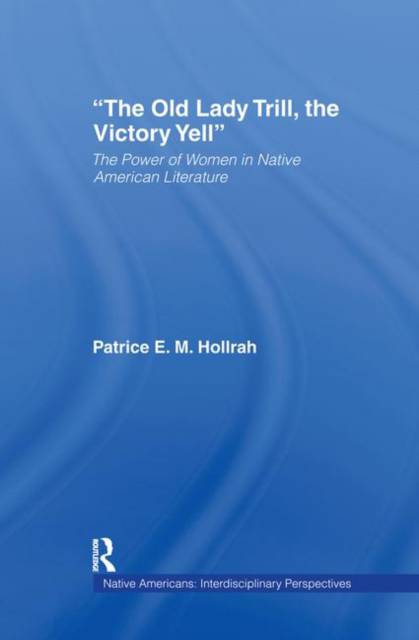
The Old Lady Trill, the Victory Yell
The Power of Women in Native American Literature
Patrice Hollrah
€ 88,95
+ 177 punten
Uitvoering
Omschrijving
From warrior women to female deities who control the cycle of life, female characters in Native American literature exhibit a social and spiritual empowerment that is quite different from the average Pocahontas we are used to seeing in mainstream literature. This work argues that a tribal construct of gender relations, where the relationship between male and female roles is complementary rather than hierarchical, accounts for the existence of these empowered female characters in Native American literature. Focusing on the work of four of the twentieth century's most famous Native American authors, Zitkala-Sa, Leslie Marmon Silko, Louise Erdrich and Sherman Alexie, Hollrah suggests that it is important to evaluate Native American literary female characters in a cultural paradigm that is less Euro-American and more compatible to the complementarity of Native American culture.
Specificaties
Betrokkenen
- Auteur(s):
- Uitgeverij:
Inhoud
- Aantal bladzijden:
- 195
- Taal:
- Engels
- Reeks:
Eigenschappen
- Productcode (EAN):
- 9780415946971
- Verschijningsdatum:
- 12/11/2003
- Uitvoering:
- Hardcover
- Formaat:
- Genaaid
- Afmetingen:
- 163 mm x 234 mm
- Gewicht:
- 408 g


Alleen bij Standaard Boekhandel
+ 177 punten op je klantenkaart van Standaard Boekhandel
Cadeau

AANGERADEN


Beoordelingen
We publiceren alleen reviews die voldoen aan de voorwaarden voor reviews. Bekijk onze voorwaarden voor reviews.