



Bedankt voor het vertrouwen het afgelopen jaar! Om jou te bedanken bieden we GRATIS verzending (in België) aan op alles gedurende de hele maand januari.
- Afhalen na 1 uur in een winkel met voorraad
- Gratis thuislevering in België vanaf € 30
- Ruim aanbod met 7 miljoen producten
Bedankt voor het vertrouwen het afgelopen jaar! Om jou te bedanken bieden we GRATIS verzending (in België) aan op alles gedurende de hele maand januari.
- Afhalen na 1 uur in een winkel met voorraad
- Gratis thuislevering in België vanaf € 30
- Ruim aanbod met 7 miljoen producten





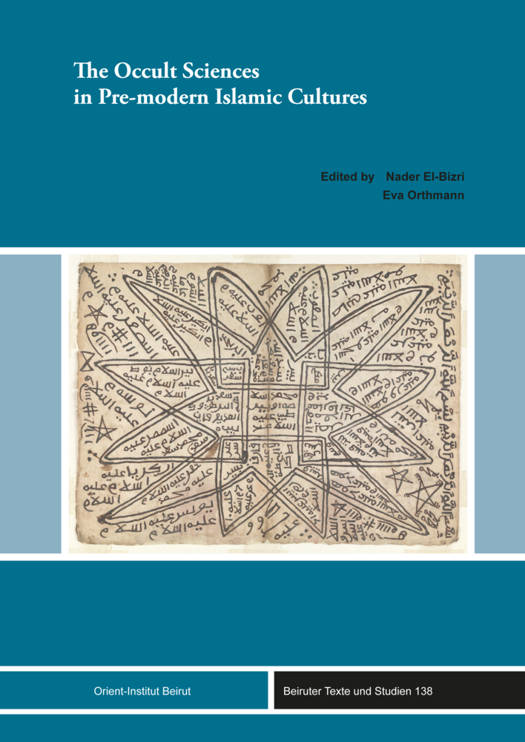
The Occult Sciences in Pre-modern Islamic Cultures
€ 65,95
+ 131 punten
Omschrijving
The present edited volume is based in part on papers that were delivered at an international conference, which was held at the American University of Beirut (AUB) on 5-6 December 2013 and was organized by the Orient-Institut Beirut (OIB) in association with the Center for Arab and Middle Eastern Studies (CAMES) at the American University of Beirut (AUB). The conference carried the title that has been retained for this present volume as: The Occult Sciences in Premodern Islamic Cultures. Not all the chapters that constitute the present volume were presented at the conference, and some of the papers that were delivered at the conference have not been included in this volume. It is therefore more prudent to think of this book as a collection of studies rather than as a strict proceedings volume. It is also evident that some of the chapters are expanded and adapted versions of the papers delivered at the conference. In pre-modern Islamic cultures, a number of arts and practices that are associated with the occult sciences were seen as epistemic expansions of the field of scientific knowledge in its various branches. The sciences of the occult dealt with what was taken to be of the order of non-observable realities that were studied by pre-modern natural scientists. This included all phenomena that could not be explained on the basis of the four classical elements. The sciences of the occult were situated between natural philosophy and metaphysics, and at times blended with these in more direct forms - as was the case with astronomia (ilm al-nujum), which combined mathematical astronomy with astrology, or the bent on arithmology and numerology that accompanied the sciences of arithmetic and number theory. An examination of these pre-modern forms of knowledge can itself further enrich our modern understanding of what constitutes the limits of science and its epistemological bearings in the deliberations of philosophy of science.
Specificaties
Betrokkenen
- Uitgeverij:
Inhoud
- Aantal bladzijden:
- 264
- Taal:
- Engels
- Reeks:
- Reeksnummer:
- nr. 138
Eigenschappen
- Productcode (EAN):
- 9783956502910
- Uitvoering:
- Hardcover
- Afmetingen:
- 170 mm x 240 mm
- Gewicht:
- 695 g

Alleen bij Standaard Boekhandel
+ 131 punten op je klantenkaart van Standaard Boekhandel
CADEAU


Beoordelingen
We publiceren alleen reviews die voldoen aan de voorwaarden voor reviews. Bekijk onze voorwaarden voor reviews.