


- Afhalen na 1 uur in een winkel met voorraad
- Gratis thuislevering in België vanaf € 30
- Ruim aanbod met 7 miljoen producten
- Afhalen na 1 uur in een winkel met voorraad
- Gratis thuislevering in België vanaf € 30
- Ruim aanbod met 7 miljoen producten





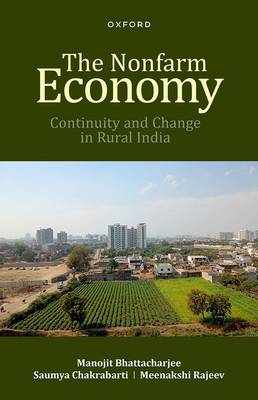
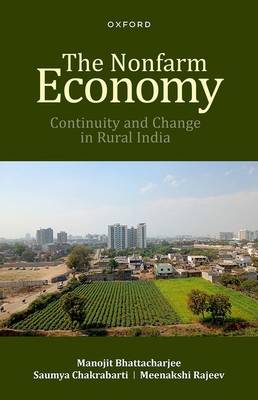
The Nonfarm Economy
Continuity and Change in Rural India
Manojit Bhattacharjee, Saumya Chakrabarti, Meenakshi Rajeev
Hardcover | Engels
€ 158,95
+ 317 punten
Omschrijving
The dominant discourse views the Indian economy's transformation over several decades as a progression towards a grand, unified, and dynamic market economy. Critiquing this discourse, The Nonfarm Economy illustrates the prevalence and intensification of 'structural dualism'. Using both theoretical and empirical perspectives, Bhattacharjee, Chakrabarti, and Rajeev analyse the origins of this persistence and the deepening of a dualistic developmental pattern. By studying the Indian rural economy and parts of the rural Global South, they demonstrate how the contemporary capital-centric growth process itself has induced the intensification of dualism, alongside factors such as population growth and land fragmentation. Only a limited segment of the impoverished population can integrate with the expanding circuits of capital using their skills, resources, and networks; a large mass of people is thus pushed towards dispossession and exclusion. The book further examines the effects of the COVID-19 pandemic on this development pattern, demonstrating how it has intensified the phenomenon of structural dualism. Contrary to the current prescriptions fixated on formal sector growth and policies extending government support, the authors posit a labour-focused (cluster-based) development model and offer constructive policy recommendations for achieving inclusive growth.
Specificaties
Betrokkenen
- Auteur(s):
- Uitgeverij:
Inhoud
- Aantal bladzijden:
- 288
- Taal:
- Engels
Eigenschappen
- Productcode (EAN):
- 9780198972020
- Verschijningsdatum:
- 26/05/2026
- Uitvoering:
- Hardcover
- Formaat:
- Genaaid
- Afmetingen:
- 140 mm x 216 mm


Alleen bij Standaard Boekhandel
+ 317 punten op je klantenkaart van Standaard Boekhandel
AANGERADEN


Beoordelingen
We publiceren alleen reviews die voldoen aan de voorwaarden voor reviews. Bekijk onze voorwaarden voor reviews.