


- Afhalen na 1 uur in een winkel met voorraad
- Gratis thuislevering in België vanaf € 30
- Ruim aanbod met 7 miljoen producten
- Afhalen na 1 uur in een winkel met voorraad
- Gratis thuislevering in België vanaf € 30
- Ruim aanbod met 7 miljoen producten





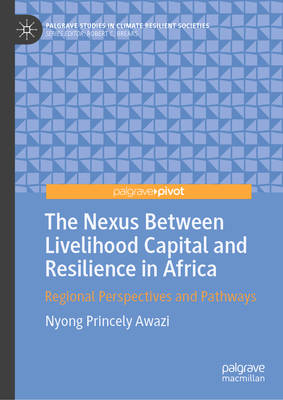
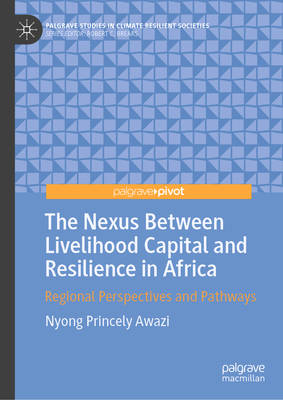
The Nexus Between Livelihood Capital and Resilience in Africa
Regional Perspectives and Pathways
Nyong Princely Awazi
€ 43,45
+ 86 punten
Omschrijving
This book examines the nexus between livelihood capital and resilience across Africa, offering a regional perspective on how people cope with climate change, conflict, and economic uncertainty. Drawing on the Sustainable Livelihoods Framework, it explains how natural, human, social, physical, and financial capital interact to shape absorptive, adaptive, and transformative capacities. Through a comparative analysis of North, East, West, Central, and Southern Africa, the book shows that resilience is context specific, shaped by governance systems, ecological conditions, and access to resources. By integrating case studies with policy analysis, the book highlights pathways for strengthening resilience through inclusive governance and strategic investment in livelihood assets. It emphasizes that resilience is not merely survival, but the ability to bounce forward toward equitable and sustainable futures. Through a synthesis of regional lessons and proffering practical recommendations, the book serves as a valuable resource for researchers, practitioners, and policymakers engaged in development and climate adaptation across diverse social and ecological contexts in Africa.
Specificaties
Betrokkenen
- Auteur(s):
- Uitgeverij:
Inhoud
- Aantal bladzijden:
- 299
- Taal:
- Engels
- Reeks:
Eigenschappen
- Productcode (EAN):
- 9783032197511
- Verschijningsdatum:
- 5/05/2026
- Uitvoering:
- Hardcover
- Formaat:
- Genaaid
- Afmetingen:
- 148 mm x 210 mm


Alleen bij Standaard Boekhandel
+ 86 punten op je klantenkaart van Standaard Boekhandel
Cadeau

AANGERADEN


Beoordelingen
We publiceren alleen reviews die voldoen aan de voorwaarden voor reviews. Bekijk onze voorwaarden voor reviews.