


- Afhalen na 1 uur in een winkel met voorraad
- Gratis thuislevering in België vanaf € 30
- Ruim aanbod met 7 miljoen producten
- Afhalen na 1 uur in een winkel met voorraad
- Gratis thuislevering in België vanaf € 30
- Ruim aanbod met 7 miljoen producten





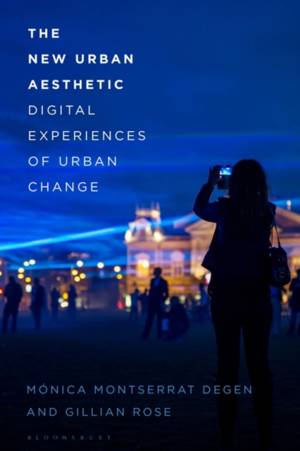
The New Urban Aesthetic
Digital Experiences of Urban Change
Mónica Montserrat Degen, Gillian Rose
Paperback | Engels
€ 35,45
+ 70 punten
Uitvoering
Omschrijving
Shortlisted for the Jane Jacobs Urban Communication Book Award 2023
Cities are key sites for the reproduction of global capitalism, and urban branding is central to this transformative dynamic. In the 21st century, cities are also being profoundly reconfigured by the deployment of many kinds of digital technologies. Both of these shifts entrain sensory bodily experiences. This digitally mediated reconfiguration of what cities feel like is what this book terms the new urban aesthetic. The book focuses on three examples of urban change in which digital technologies of different kinds were central: a large scale urban redevelopment in Doha, the retrofitting of Milton Keynes to become a smart city, and the cultural regeneration of Smithfield Market into the Culture Mile in London. Each case study focusses on a different kind of digital mediation, including the computer-generated images created to sell new urban developments, smart city phone apps, and Instagram posts about particular urban places. The book identifies three versions of the new urban aesthetic: glamorous, flowing, and dramatic. It shows how each of these organize sensory experiences through particular distributions of temporality and spatiality. As well as exploring the importance of sensory constellations in our digitally mediated cities, the book also offers ways to investigate their fragility and potential for subversion. The New Urban Aesthetic is essential reading for researchers and students in urban studies, architecture, digital studies, sociology, and human geography.Specificaties
Betrokkenen
- Auteur(s):
- Uitgeverij:
Inhoud
- Aantal bladzijden:
- 192
- Taal:
- Engels
Eigenschappen
- Productcode (EAN):
- 9781350283510
- Verschijningsdatum:
- 27/07/2023
- Uitvoering:
- Paperback
- Formaat:
- Trade paperback (VS)
- Afmetingen:
- 156 mm x 234 mm
- Gewicht:
- 272 g


Alleen bij Standaard Boekhandel
+ 70 punten op je klantenkaart van Standaard Boekhandel
Cadeau

AANGERADEN


Beoordelingen
We publiceren alleen reviews die voldoen aan de voorwaarden voor reviews. Bekijk onze voorwaarden voor reviews.