


- Afhalen na 1 uur in een winkel met voorraad
- Gratis thuislevering in België vanaf € 30
- Ruim aanbod met 7 miljoen producten
- Afhalen na 1 uur in een winkel met voorraad
- Gratis thuislevering in België vanaf € 30
- Ruim aanbod met 7 miljoen producten





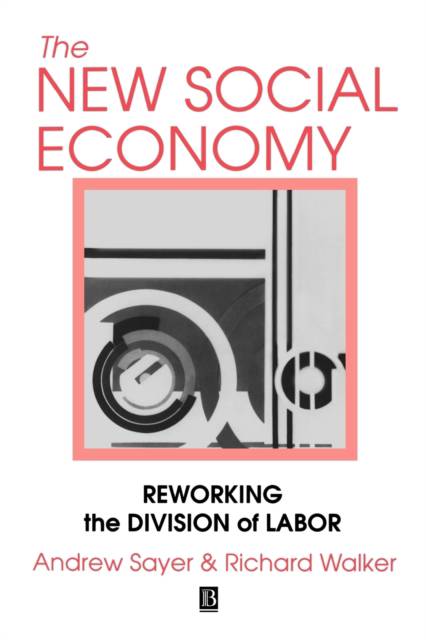
The New Social Economy
Reworking the Division of Labor
Andrew Sayer, Richard Walker
Paperback | Engels
€ 94,95
+ 189 punten
Omschrijving
As capitalism develops and state socialism disintegrates, divisions of labor are being reorganized, with major implications for the distribution of power in society. Yet the concept of division of labor has been one of the most neglected in contemporary political economy and social theory. Compared to class, gender or markets, it has typically been treated as a rather indifferent concept, part of the backdrop rather than one of the key forces of the economy and society.
Dealing with the reworking of the division of labor in both practice and theory, and transcending the narrow boundaries of academic disciplines, the authors provide a new perspective on some of the most hotly debated issues in social science.
Dealing with the reworking of the division of labor in both practice and theory, and transcending the narrow boundaries of academic disciplines, the authors provide a new perspective on some of the most hotly debated issues in social science.
Specificaties
Betrokkenen
- Auteur(s):
- Uitgeverij:
Inhoud
- Aantal bladzijden:
- 316
- Taal:
- Engels
Eigenschappen
- Productcode (EAN):
- 9781557862808
- Verschijningsdatum:
- 27/07/1992
- Uitvoering:
- Paperback
- Formaat:
- Trade paperback (VS)
- Afmetingen:
- 153 mm x 229 mm
- Gewicht:
- 517 g


Alleen bij Standaard Boekhandel
+ 189 punten op je klantenkaart van Standaard Boekhandel
AANGERADEN


Beoordelingen
We publiceren alleen reviews die voldoen aan de voorwaarden voor reviews. Bekijk onze voorwaarden voor reviews.