



- Afhalen na 1 uur in een winkel met voorraad
- In januari gratis thuislevering in België
- Ruim aanbod met 7 miljoen producten
- Afhalen na 1 uur in een winkel met voorraad
- In januari gratis thuislevering in België
- Ruim aanbod met 7 miljoen producten





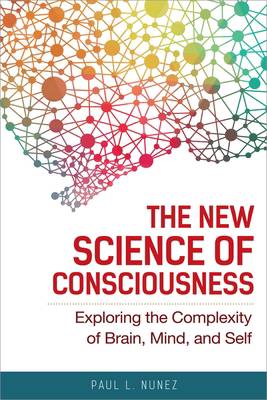
The New Science of Consciousness
Exploring the Complexity of Brain, Mind, and Self
Paul L Nunez
Paperback | Engels
€ 32,45
+ 64 punten
Omschrijving
This book explains in layperson's terms a new approach to studying consciousness based on a partnership between neuroscientists and complexity scientists. The author, a physicist turned neuroscientist, outlines essential features of this partnership. The new science goes well beyond traditional cognitive science and simple neural networks, which are often the focus in artificial intelligence research. It involves many fields including neuroscience, artificial intelligence, physics, cognitive science, and psychiatry. What causes autism, schizophrenia, and Alzheimer's disease? How does our unconscious influence our actions? As the author shows, these important questions can be viewed in a new light when neuroscientists and complexity scientists work together. This cross-disciplinary approach also offers fresh insights into the major unsolved challenge of our age: the origin of self-awareness. Do minds emerge from brains? Or is something more involved? Using human social networks as a metaphor, the author explains how brain behavior can be compared with the collective behavior of large-scale global systems. Emergent global systems that interact and form relationships with lower levels of organization and the surrounding environment provide useful models for complex brain functions. By blending lucid explanations with illuminating analogies, this book offers the general reader a window into the latest exciting developments in brain research.
Specificaties
Betrokkenen
- Auteur(s):
- Uitgeverij:
Inhoud
- Aantal bladzijden:
- 376
- Taal:
- Engels
Eigenschappen
- Productcode (EAN):
- 9781633886964
- Verschijningsdatum:
- 15/07/2021
- Uitvoering:
- Paperback
- Formaat:
- Trade paperback (VS)
- Afmetingen:
- 147 mm x 226 mm
- Gewicht:
- 521 g


Alleen bij Standaard Boekhandel
+ 64 punten op je klantenkaart van Standaard Boekhandel
Cadeau

AANGERADEN


Beoordelingen
We publiceren alleen reviews die voldoen aan de voorwaarden voor reviews. Bekijk onze voorwaarden voor reviews.