


- Afhalen na 1 uur in een winkel met voorraad
- Gratis thuislevering in België vanaf € 30
- Ruim aanbod met 7 miljoen producten
- Afhalen na 1 uur in een winkel met voorraad
- Gratis thuislevering in België vanaf € 30
- Ruim aanbod met 7 miljoen producten





€ 222,95
+ 445 punten
Eenvoudig bestellen
Veilig betalen


Gratis thuislevering vanaf € 30 (via bpost)
Gratis levering in je Standaard Boekhandel
Omschrijving
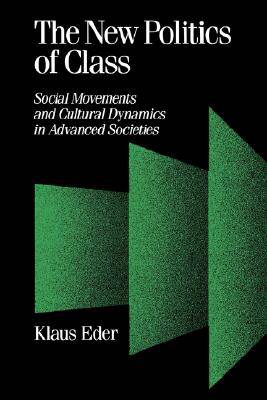
Are contemporary societies organized by class? In recent years the apparent fragmentation of established class structures and the emergence of new social movements--in particular the women′s movement and environmentalism--have altered the traditional expressions of class in society. At the same time, these changes have posed fundamental questions for the concept of class in sociology and political science. In this major reassessment, Klaus Eder offers a new perspective on the status of class in modernity. Drawing on a critique of Bourdieu, Touraine, and Habermas, he outlines a cultural conception of class as the basis for understanding contemporary societies. His model reevaluates the role of the middle classes, traditionally the crux of class analysis, and links class to social theories of power and cultural capital. The result is a cultural theory of class which incorporates the changing forms of collective action and the new social movements of contemporary societies. An invaluable contribution both to social theory and to the theory of class and stratification, The New Politics of Class will be of interest to a broad readership in sociology and political science. "Given the richness of Klaus Eder′s theorizing, there are many ways of reading this volume. . . [His work is] full of provocative conceptual ideas and basically sound insights." --American Journal of Sociology
Specificaties
Betrokkenen
- Auteur(s):
- Uitgeverij:
Inhoud
- Aantal bladzijden:
- 242
- Taal:
- Engels
- Reeks:
- Reeksnummer:
- nr. 23
Eigenschappen
- Productcode (EAN):
- 9780803988682
- Verschijningsdatum:
- 19/08/1993
- Uitvoering:
- Paperback
- Formaat:
- Trade paperback (VS)
- Afmetingen:
- 156 mm x 234 mm
- Gewicht:
- 335 g


Alleen bij Standaard Boekhandel
+ 445 punten op je klantenkaart van Standaard Boekhandel
CADEAU

AANGERADEN


Beoordelingen
We publiceren alleen reviews die voldoen aan de voorwaarden voor reviews. Bekijk onze voorwaarden voor reviews.