



Je cadeautjes zeker op tijd in huis hebben voor de feestdagen? Kom langs in onze winkels en vind het perfecte geschenk!
- Afhalen na 1 uur in een winkel met voorraad
- Gratis thuislevering in België vanaf € 30
- Ruim aanbod met 7 miljoen producten
Je cadeautjes zeker op tijd in huis hebben voor de feestdagen? Kom langs in onze winkels en vind het perfecte geschenk!
- Afhalen na 1 uur in een winkel met voorraad
- Gratis thuislevering in België vanaf € 30
- Ruim aanbod met 7 miljoen producten





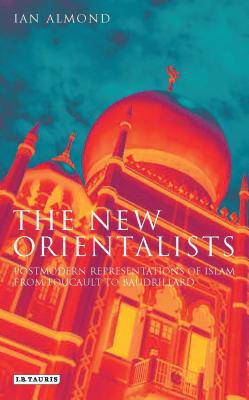
The New Orientalists
Postmodern Representations of Islam from Foucault to Baudrillard
Ian Almond
Paperback | Engels
€ 60,95
+ 121 punten
Omschrijving
The west's Orientalism - its construction of an Arab or Islamic 'Other' - has been exposed and examined under the critical theory microscope and thoroughly expelled, it seems, from academic thought. At the same time postmodern thinkers from Nietzsche onwards have employed the motifs and symbols of the Islamic Orient within an ongoing critique of western modernity, an appropriation which, this hugely controversial book argues, runs every risk of becoming a new and more insidious Orientalist strain.Ian Almond sensitively yet rigorously examines the work of Nietzsche, Jacques Derrida, Michel Foucault, Jean Baudrillard, Julia Kristeva and Slavoj Zizek, as well as that of postmodern writers Jorge Luis Borges, Salman Rushdie and Orhan Pamuk. In doing so he exposes the implications of this 'use' of Islam for both the postmodern project and for Islam itself. Taking apart the assumptions, omissions and contradictions inherent in these thinkers' approaches to Islam and to the Arab world, and drawing on the work of prominent Muslim thinkers including Ziauddin Sardar, Aziz Al-Azmeh and Bobby S. Sayyid, "The New Orientalists" highlights the difficulty of ever speaking truly about the 'Other'.
In light of the current Western climate of fear and hysteria surrounding the Islamic world, this groundbreaking project could hardly be more timely.
In light of the current Western climate of fear and hysteria surrounding the Islamic world, this groundbreaking project could hardly be more timely.
Specificaties
Betrokkenen
- Auteur(s):
- Uitgeverij:
Inhoud
- Aantal bladzijden:
- 240
- Taal:
- Engels
Eigenschappen
- Productcode (EAN):
- 9781845113988
- Verschijningsdatum:
- 1/08/2007
- Uitvoering:
- Paperback
- Formaat:
- Trade paperback (VS)
- Afmetingen:
- 138 mm x 202 mm
- Gewicht:
- 303 g


Alleen bij Standaard Boekhandel
+ 121 punten op je klantenkaart van Standaard Boekhandel
CADEAU


Beoordelingen
We publiceren alleen reviews die voldoen aan de voorwaarden voor reviews. Bekijk onze voorwaarden voor reviews.