


- Afhalen na 1 uur in een winkel met voorraad
- Gratis thuislevering in België vanaf € 30
- Ruim aanbod met 7 miljoen producten
- Afhalen na 1 uur in een winkel met voorraad
- Gratis thuislevering in België vanaf € 30
- Ruim aanbod met 7 miljoen producten





€ 21,24
+ 21 punten
Uitvoering
Omschrijving
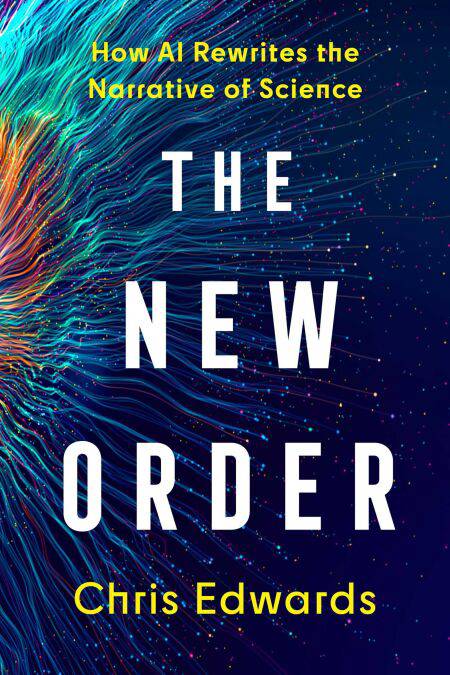
What if the great discoveries of science came in the “wrong” order? The Laws of Thermodynamics were discovered well after the creation of algebra, classical physics, and chemistry, but are perhaps much more important to our basic understanding of the universe. This flawed chronology led to a confusion that has prevented a cross-curricular understanding of the sciences. With the development of Artificial Intelligence, it will soon be possible to solve the philosophical and biological problem of solipsism, the problem that all of our scientific discoveries have been necessarily – and incorrectly – built upon anachronistic foundations. In other words, we’ve built our fundamental understanding of science out of order.
In The New Order: How AI Rewrites the Narrative of Science, Chris Edwards shows that AI will be able to understand science outside of the traditional l chronological developments of the sciences, unlocking entirely new potentials and perspectives on the universe. If human scholars are to understand how AI interprets the universe, we will first need to understand the scientific narrative in a “new order.”
Moving through the dawn scientific history to modern quantum physics, Edwards frames a “new order” to place thermodynamics in its proper place at the center of our scientific universe. AI is likely to view the history of the universe through entropy and probability, and with the insights and invention of The New Order, readers can, too.
In The New Order: How AI Rewrites the Narrative of Science, Chris Edwards shows that AI will be able to understand science outside of the traditional l chronological developments of the sciences, unlocking entirely new potentials and perspectives on the universe. If human scholars are to understand how AI interprets the universe, we will first need to understand the scientific narrative in a “new order.”
Moving through the dawn scientific history to modern quantum physics, Edwards frames a “new order” to place thermodynamics in its proper place at the center of our scientific universe. AI is likely to view the history of the universe through entropy and probability, and with the insights and invention of The New Order, readers can, too.
Specificaties
Betrokkenen
- Auteur(s):
- Uitgeverij:
Inhoud
- Aantal bladzijden:
- 232
- Taal:
- Engels
Eigenschappen
- Productcode (EAN):
- 9781493089123
- Verschijningsdatum:
- 14/04/2025
- Uitvoering:
- E-book
- Beveiligd met:
- Adobe DRM
- Formaat:
- ePub


Alleen bij Standaard Boekhandel
+ 21 punten op je klantenkaart van Standaard Boekhandel
Cadeau

AANGERADEN


Beoordelingen
We publiceren alleen reviews die voldoen aan de voorwaarden voor reviews. Bekijk onze voorwaarden voor reviews.