


- Afhalen na 1 uur in een winkel met voorraad
- Gratis thuislevering in België vanaf € 30
- Ruim aanbod met 7 miljoen producten
- Afhalen na 1 uur in een winkel met voorraad
- Gratis thuislevering in België vanaf € 30
- Ruim aanbod met 7 miljoen producten





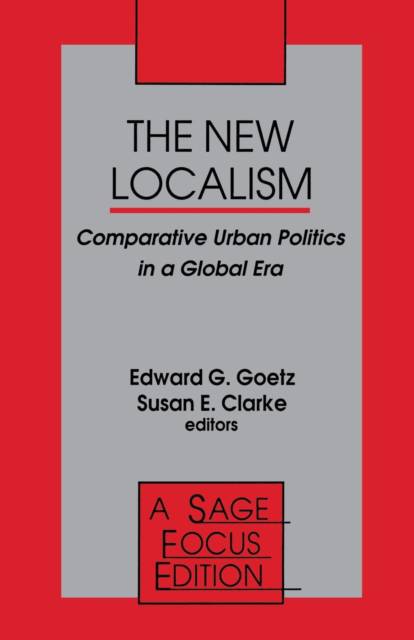
The New Localism
€ 257,95
+ 515 punten
Omschrijving
How have local economic conditions been affected by the emergence of a global economy? What changes, if any, have local political authorities made to counterbalance the new emphasis on world interests? Comprehensive and timely, The New Localism answers these and other vital questions by exploring local political restructuring in the face of massive global economic change. Prominent urban scholars cover the privatization of local politics, the emergence of local economic and social activism, and increased competition--on both local and national levels. This important volume examines various levels of development in such diverse political settings as the United States, the United Kingdom, Eastern Europe, Africa, and the Caribbean. The New Localism is a must read for students and scholars of urban studies, comparative politics, political science, third world development, planning, public administration, and sociology. "Goetz and Clarke′s book brings a useful perspective to this literature, not so much because of its theoretical originality, but for its didactic value. It is a straightforward presentation of cases of urban restructuring, well integrated within a common conceptual framework labelled "new localism" --Canadian Journal of Urban Research
Specificaties
Betrokkenen
- Uitgeverij:
Inhoud
- Aantal bladzijden:
- 240
- Taal:
- Engels
- Reeks:
- Reeksnummer:
- nr. 164
Eigenschappen
- Productcode (EAN):
- 9780803949225
- Verschijningsdatum:
- 7/10/1993
- Uitvoering:
- Paperback
- Formaat:
- Trade paperback (VS)
- Afmetingen:
- 140 mm x 213 mm
- Gewicht:
- 340 g


Alleen bij Standaard Boekhandel
+ 515 punten op je klantenkaart van Standaard Boekhandel
Cadeau

AANGERADEN


Beoordelingen
We publiceren alleen reviews die voldoen aan de voorwaarden voor reviews. Bekijk onze voorwaarden voor reviews.