


- Afhalen na 1 uur in een winkel met voorraad
- Gratis thuislevering in België vanaf € 30
- Ruim aanbod met 7 miljoen producten
- Afhalen na 1 uur in een winkel met voorraad
- Gratis thuislevering in België vanaf € 30
- Ruim aanbod met 7 miljoen producten





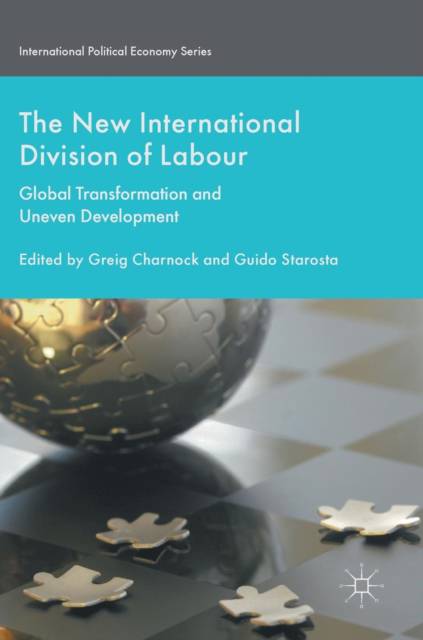
The New International Division of Labour
Global Transformation and Uneven Development
Guido Starosta
€ 213,95
+ 427 punten
Eenvoudig bestellen
Veilig betalen


Gratis thuislevering vanaf € 30 (via bpost)
Gratis levering in je Standaard Boekhandel
Omschrijving
This book revisits the debate over the new international division of labour (NIDL) that dominated discussions in international political economy and development studies until the early 1990s. It submits that a revised NIDL thesis can shed light on the specificities of capitalist development in various parts of the world today. Taken together, the contributions amount to a novel value-theoretical approach to understanding the NIDL. This rests upon the distinction between the global economic content that determines the constitution and dynamics of the NIDL and the evolving national political forms that mediate its development. More specifically, the authors argue that uneven development is an expression of the underlying essential unity of the production of relative surplus-value on a world scale. They substantiate and illustrate this argument through several international case studies, including Argentina, Brazil, Ecuador, Ireland, South Korea, Spain and Venezuela.
Specificaties
Betrokkenen
- Auteur(s):
- Uitgeverij:
Inhoud
- Aantal bladzijden:
- 252
- Taal:
- Engels
- Reeks:
Eigenschappen
- Productcode (EAN):
- 9781137538710
- Verschijningsdatum:
- 15/06/2016
- Uitvoering:
- Hardcover
- Formaat:
- Genaaid
- Afmetingen:
- 153 mm x 220 mm
- Gewicht:
- 498 g


Alleen bij Standaard Boekhandel
+ 427 punten op je klantenkaart van Standaard Boekhandel
CADEAU

AANGERADEN


Beoordelingen
We publiceren alleen reviews die voldoen aan de voorwaarden voor reviews. Bekijk onze voorwaarden voor reviews.