



Je cadeautjes zeker op tijd in huis hebben voor de feestdagen? Kom langs in onze winkels en vind het perfecte geschenk!
- Afhalen na 1 uur in een winkel met voorraad
- Gratis thuislevering in België vanaf € 30
- Ruim aanbod met 7 miljoen producten
Je cadeautjes zeker op tijd in huis hebben voor de feestdagen? Kom langs in onze winkels en vind het perfecte geschenk!
- Afhalen na 1 uur in een winkel met voorraad
- Gratis thuislevering in België vanaf € 30
- Ruim aanbod met 7 miljoen producten





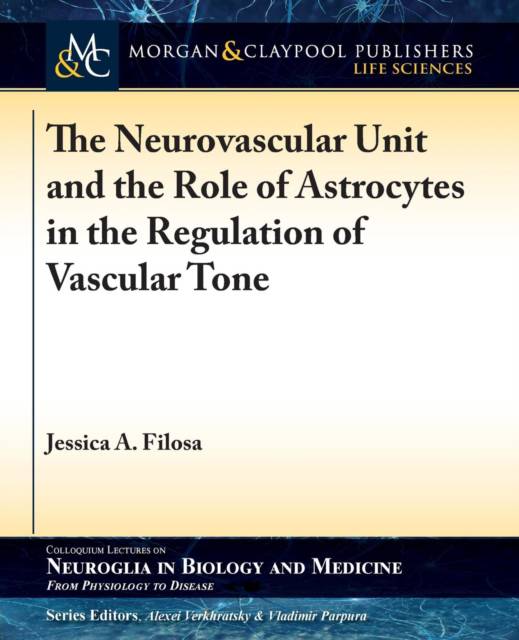
The Neurovascular Unit and the Role of Astrocytes in the Regulation of Vascular Tone
Jessica A Filosa
€ 61,45
+ 122 punten
Omschrijving
Optimal cerebral blood flow is coordinated by functional hyperemia and cerebral autoregulation. These processes ensure that the metabolic demands of the brain are met at all times. Both in vivo and in vitro studies support a role for astrocytes in the regulation of cerebral blood flow. In this we review the cellular mechanisms contributing to astrocyte-mediated vasodilation and vasoconstriction of parenchymal arterioles. Primarily, we discuss how activity-dependent changes in astrocytic Ca2+ contribute to the release of vasoactive signals involved in neurovascular coupling. Following the rise in astrocytic Ca2+ and phospholipase A2 activation, arachidonic acid is released and metabolized into multiple vasoactive signals (e.g., prostaglandins, epoxyeicosatrienoic acids, and 20-HETE). The level of arteriole tone along with the metabolic conditions of the tissue can alter the action of these signals leading to either vasodilation or vasoconstriction. Moreover, increased Ca2+ also activates large conductance Ca2+-activated K+ channels expressed in astrocytic endfeet processes. Depending on the K+ efflux concentration released, this pathway can also elicit vasodilation or vasoconstriction of parenchymal arterioles. Finally, we conclude by discussing recent divergent in vivo findings which question a role for astrocyte in functional hyperemia.
Specificaties
Betrokkenen
- Auteur(s):
- Uitgeverij:
Inhoud
- Aantal bladzijden:
- 60
- Taal:
- Engels
- Reeks:
Eigenschappen
- Productcode (EAN):
- 9781615046782
- Verschijningsdatum:
- 1/06/2015
- Uitvoering:
- Paperback
- Formaat:
- Trade paperback (VS)
- Afmetingen:
- 190 mm x 235 mm
- Gewicht:
- 131 g


Alleen bij Standaard Boekhandel
+ 122 punten op je klantenkaart van Standaard Boekhandel
CADEAU


Beoordelingen
We publiceren alleen reviews die voldoen aan de voorwaarden voor reviews. Bekijk onze voorwaarden voor reviews.