


- Afhalen na 1 uur in een winkel met voorraad
- Gratis thuislevering in België vanaf € 30
- Ruim aanbod met 7 miljoen producten
- Afhalen na 1 uur in een winkel met voorraad
- Gratis thuislevering in België vanaf € 30
- Ruim aanbod met 7 miljoen producten





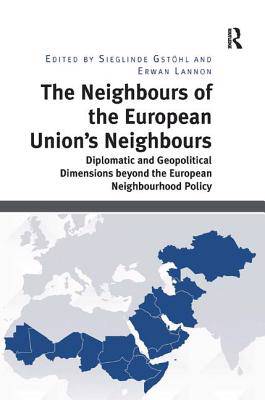
The Neighbours of the European Union's Neighbours
Diplomatic and Geopolitical Dimensions beyond the European Neighbourhood Policy
Sieglinde Gstöhl, Erwan Lannon
Hardcover | Engels
€ 193,95
+ 387 punten
Uitvoering
Omschrijving
Should the European Neighbourhood Policy stop at the borders of the European Union's immediate neighbouring countries? This book is the first full length study of the 'neighbours of the EU's neighbours', a concept originally introduced by the European Commission with reference to Saharan Africa, the Middle East and Central Asia. These regions in the EU's broader neighbourhood are often perceived as an 'arc of crisis' from which manifold challenges emanate for Europe. This timely book takes stock of the state of the EU's cooperation with the neighbours of its neighbours and explores how the concept might help promote security, stability and prosperity beyond the countries which are formally part of the European Neighbourhood Policy. How can the EU create bridges between these regions? What instruments does the EU have at its disposal and how can it link them in order to respond to the challenges and overcome the current fragmentation? One of the conclusions is the suggestion to consider a pragmatic 'EU Strategy for the Neighbours of its Neighbours' which addresses the needs of the broader EU neighbourhood in a more systematic and consistent manner and helps transform in the long run the 'arc of crisis' into another 'ring of friends'.
Specificaties
Betrokkenen
- Auteur(s):
- Uitgeverij:
Inhoud
- Aantal bladzijden:
- 352
- Taal:
- Engels
Eigenschappen
- Productcode (EAN):
- 9781472417770
- Verschijningsdatum:
- 28/01/2015
- Uitvoering:
- Hardcover
- Formaat:
- Genaaid
- Afmetingen:
- 156 mm x 234 mm
- Gewicht:
- 666 g


Alleen bij Standaard Boekhandel
+ 387 punten op je klantenkaart van Standaard Boekhandel
CADEAU

AANGERADEN


Beoordelingen
We publiceren alleen reviews die voldoen aan de voorwaarden voor reviews. Bekijk onze voorwaarden voor reviews.