


- Afhalen na 1 uur in een winkel met voorraad
- Gratis thuislevering in België vanaf € 30
- Ruim aanbod met 7 miljoen producten
- Afhalen na 1 uur in een winkel met voorraad
- Gratis thuislevering in België vanaf € 30
- Ruim aanbod met 7 miljoen producten





€ 76,45
+ 152 punten
Uitvoering
Omschrijving
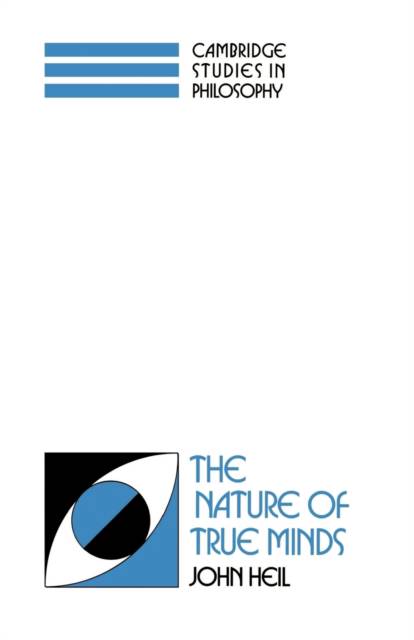
This book aims at reconciling the emerging conceptions of mind and their contents that have, in recent years, come to seem irreconcilable. Post-Cartesian philosophers face the challenge of comprehending minds as natural objects possessing apparently non-natural powers of thought. The difficulty is to understand how our mental capacities, no less than our biological or chemical characteristics, might ultimately be products of our fundamental physical constituents, and to do so in a way that preserves the phenomena. Externalists argue that the significance of thought turns on the circumstances of thinkers; reductionists hold that mental characteristics are physical; eliminationists contend that the concept of thought belongs to an outmoded folk theory of behavior. John Heil explores these topics and points the way to a naturalistic synthesis, one that accords the mental a place in the physical world alongside the non-mental.
Specificaties
Betrokkenen
- Auteur(s):
- Uitgeverij:
Inhoud
- Aantal bladzijden:
- 264
- Taal:
- Engels
- Reeks:
Eigenschappen
- Productcode (EAN):
- 9780521424004
- Verschijningsdatum:
- 25/09/1992
- Uitvoering:
- Paperback
- Formaat:
- Trade paperback (VS)
- Afmetingen:
- 138 mm x 214 mm
- Gewicht:
- 308 g


Alleen bij Standaard Boekhandel
+ 152 punten op je klantenkaart van Standaard Boekhandel
Cadeau

AANGERADEN


Beoordelingen
We publiceren alleen reviews die voldoen aan de voorwaarden voor reviews. Bekijk onze voorwaarden voor reviews.