


- Afhalen na 1 uur in een winkel met voorraad
- Gratis thuislevering in België vanaf € 30
- Ruim aanbod met 7 miljoen producten
- Afhalen na 1 uur in een winkel met voorraad
- Gratis thuislevering in België vanaf € 30
- Ruim aanbod met 7 miljoen producten





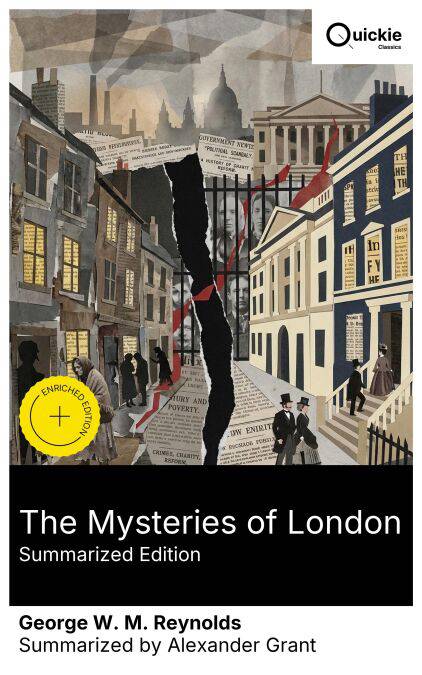
The Mysteries of London (Summarized Edition) E-BOOK
Enriched edition. From rookeries to corridors of power: a penny-serial of Newgate crime, workhouse cruelty, and Chartist social fury
George W. M. Reynolds
E-book | Engels
€ 1,99
+ 1 punten
Uitvoering
Omschrijving
First published as a penny serial in the 1840s, The Mysteries of London maps the metropolis from rookeries and workhouses to drawing rooms and corridors of power. Reynolds blends Gothic atmosphere, Newgate sensationalism, and the social-problem novel into swift cliffhangers, direct moral asides, and exposés of institutional cruelty—vice, prostitution, debtors' prisons, and sham philanthropy—refashioning the urban "mysteries" mode of Eugène Sue for distinctly English fears and desires. George W. M. Reynolds—a prolific journalist and radical democrat—drew on deep experience with popular print and Chartist grievances. A formative sojourn in France acquainted him with feuilleton methods and Sue's social critique; later, as editor of cheap papers, he mastered the tastes of a mass readership. The novel's indignation and pedagogic intrusions reflect a writer aiming at reform as insistently as at entertainment. Rich in incident yet steered by sharp moral intelligence, The Mysteries of London rewards readers interested in sensation fiction's roots, urban poverty, and the radical undercurrents of Victorian culture. Students of Dickens will find illuminating counterpoints; general readers will relish its headlong pace and lurid vigor. A classic of popular radicalism, it remains unsettlingly—and instructively—modern.
Quickie Classics summarizes timeless works with precision, preserving the author's voice and keeping the prose clear, fast, and readable—distilled, never diluted. Enriched Edition extras: Introduction · Synopsis · Historical Context · Brief Analysis · 4 Reflection Q&As · Editorial Footnotes.
Quickie Classics summarizes timeless works with precision, preserving the author's voice and keeping the prose clear, fast, and readable—distilled, never diluted. Enriched Edition extras: Introduction · Synopsis · Historical Context · Brief Analysis · 4 Reflection Q&As · Editorial Footnotes.
Specificaties
Betrokkenen
- Auteur(s):
- Uitgeverij:
Inhoud
- Aantal bladzijden:
- 1218
- Taal:
- Engels
Eigenschappen
- Productcode (EAN):
- 8596547877370
- Verschijningsdatum:
- 9/01/2026
- Uitvoering:
- E-book
- Beveiligd met:
- Digital watermarking
- Formaat:
- ePub


Alleen bij Standaard Boekhandel
+ 1 punten op je klantenkaart van Standaard Boekhandel
Cadeau

AANGERADEN


Beoordelingen
We publiceren alleen reviews die voldoen aan de voorwaarden voor reviews. Bekijk onze voorwaarden voor reviews.