


- Afhalen na 1 uur in een winkel met voorraad
- Gratis thuislevering in België vanaf € 30
- Ruim aanbod met 7 miljoen producten
- Afhalen na 1 uur in een winkel met voorraad
- Gratis thuislevering in België vanaf € 30
- Ruim aanbod met 7 miljoen producten





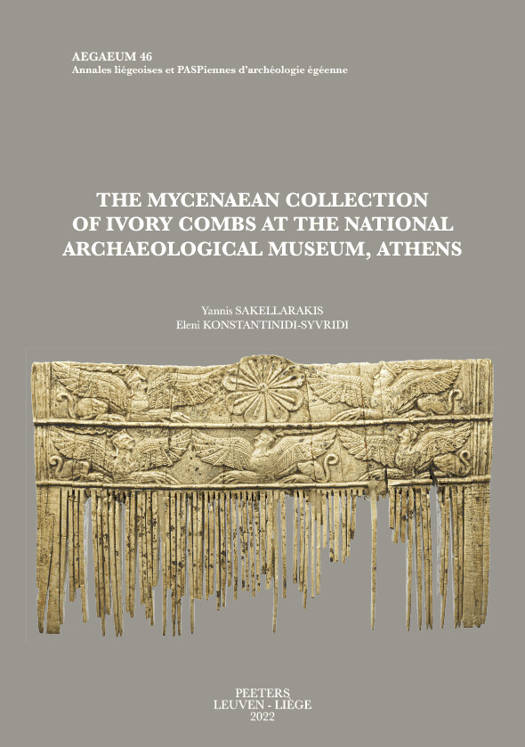
The Mycenaean Collection of Ivory Combs at the National Archaeological Museum, Athens
Y Sakellarakis, E Konstantinidi-Syvridi
Hardcover | Engels | Aegaeum (Annales d'archéologie égéenne de l'Université de Liège et UT-PASP) | nr. 46
€ 75,00
+ 150 punten
Eenvoudig bestellen
Veilig betalen


Gratis thuislevering vanaf € 30 (via bpost)
Gratis levering in je Standaard Boekhandel
Omschrijving
Ivory combs of the Late Bronze Age Aegean have not gained the proper attention so far, despite the fact that they belong, together with the pins and pyxis fashioned by the same material, to prestigious toiletry sets documented in the wider area of the Eastern Mediterranean. Although they never became an indispensable accessory for the Mycenaeans, ivory combs indicate prosperity and high status for the male and female burials they furnished, from the exquisite gold-sheathed specimens of Grave Circle A at Mycenae to the later simple ones of the warrior burials in Achaea. The corpus of the 83 Mycenaean combs held at the National Archaeological Museum is the largest of the kind, with specimens covering almost all the Peloponnese and part of Attica, ranging in date from Late Helladic I to Late Helladic IIIC. Aspects of their technology, typology, iconography, context and social significance discussed in the volume, are expected to shed light on yet another important class of Mycenaean craftsmanship.
Specificaties
Betrokkenen
- Auteur(s):
- Uitgeverij:
Inhoud
- Aantal bladzijden:
- 77
- Taal:
- Engels
- Reeks:
- Reeksnummer:
- nr. 46
Eigenschappen
- Productcode (EAN):
- 9789042948907
- Verschijningsdatum:
- 10/05/2022
- Uitvoering:
- Hardcover
- Formaat:
- Genaaid
- Afmetingen:
- 210 mm x 298 mm
- Gewicht:
- 884 g


Alleen bij Standaard Boekhandel
+ 150 punten op je klantenkaart van Standaard Boekhandel
CADEAU

AANGERADEN


Beoordelingen
We publiceren alleen reviews die voldoen aan de voorwaarden voor reviews. Bekijk onze voorwaarden voor reviews.