


- Afhalen na 1 uur in een winkel met voorraad
- Gratis thuislevering in België vanaf € 30
- Ruim aanbod met 7 miljoen producten
- Afhalen na 1 uur in een winkel met voorraad
- Gratis thuislevering in België vanaf € 30
- Ruim aanbod met 7 miljoen producten





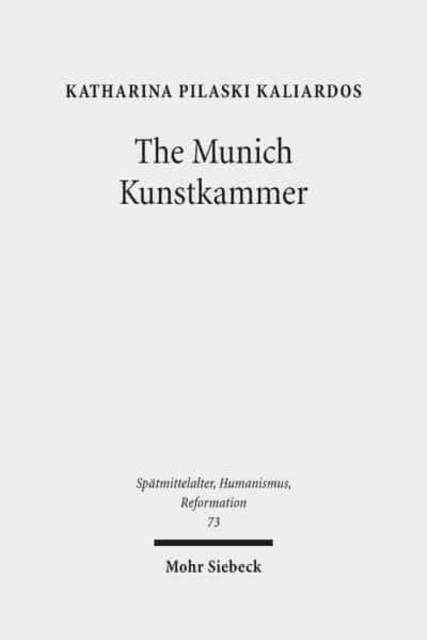
The Munich Kunstkammer
Art, Nature, and the Representation of Knowledge in Courtly Contexts
Katharina Pilaski Kaliardos
€ 119,95
+ 239 punten
Omschrijving
The Kunstkammer that Albrecht V, Duke of Bavaria, founded in Munich in the 1560s was among the first princely collections conceived as a site for the storage and production of universal knowledge. In her study, Katharina Pilaski Kaliardos focuses on the collection's functions in the context of the larger program of the centralization of princely power and the territory's confessionalization in the wake of the Council of Trent. For the first time, this study anchors the Kunstkammer in the immediate context of the intellectual milieu of the Bavarian court, reconstructing the interests of courtiers related to the collection's epistemology. In her focus on the Kunstkammer's Counter Reformation context, the author analyzes the confessional arguments made by material objects representing natural prodigies, and situates reproductions of natural objects in the context of contemporary votive practice and in the natural-philosophical discourse about the powers of art to reproduce nature.
Specificaties
Betrokkenen
- Auteur(s):
- Uitgeverij:
Inhoud
- Aantal bladzijden:
- 212
- Taal:
- Engels
- Reeks:
Eigenschappen
- Productcode (EAN):
- 9783161521881
- Verschijningsdatum:
- 1/07/2013
- Uitvoering:
- Hardcover
- Formaat:
- Genaaid
- Afmetingen:
- 152 mm x 231 mm
- Gewicht:
- 476 g


Alleen bij Standaard Boekhandel
+ 239 punten op je klantenkaart van Standaard Boekhandel
AANGERADEN


Beoordelingen
We publiceren alleen reviews die voldoen aan de voorwaarden voor reviews. Bekijk onze voorwaarden voor reviews.