


- Afhalen na 1 uur in een winkel met voorraad
- Gratis thuislevering in België vanaf € 30
- Ruim aanbod met 7 miljoen producten
- Afhalen na 1 uur in een winkel met voorraad
- Gratis thuislevering in België vanaf € 30
- Ruim aanbod met 7 miljoen producten





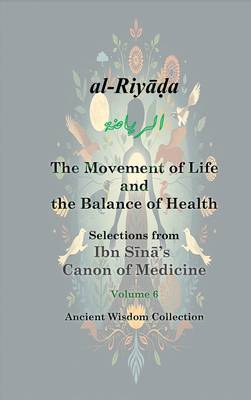
The Movement of Life and the Balance of Health
Ibn Sīnā on Exercise, Regimen, and the Preservation of the Body
Al-Hussain Ibn Sina, Avicenna
€ 42,95
+ 85 punten
Omschrijving
This volume presents a curated and thematically organized translation of selected passages on riyāḍa (exercise) from the Canon of Medicine (al-Qānūn fī al-ṭibb) of Ibn Sīnā. Drawing on Books I-IV of the Canon, it brings together both the systematic chapters in which exercise is treated as a central component of regimen, and the numerous dispersed references in which it appears as a governing principle in physiology, pathology, and therapy.In Ibn Sīnā's medical thought, exercise is a foundational mechanism of life. It sustains the body's internal balance by promoting transformation, aiding digestion, and preventing the accumulation of harmful residues. Its proper use-defined by moderation, timing, and adaptation to individual condition-extends across all domains of medicine: from the preservation of health and the development of the body, to the treatment of disease and the regulation of daily life. This volume traces that breadth, showing how a single principle operates across multiple levels of a unified medical system.Ibn Sīnā (980-1037), known in the Latin tradition as Avicenna, was one of the most influential physicians and philosophers of the medieval world. His Canon of Medicine remained a central medical text in both the Islamic world and Europe for centuries. Combining clinical observation with philosophical rigor, he articulated a comprehensive vision of the human body as a dynamic system governed by processes of balance, transformation, and motion.By assembling and translating these passages, this volume offers both a focused study of riyāḍa and an entry point into Ibn Sīnā's broader medical philosophy-one that continues to invite reflection on the nature of health, the role of movement, and the enduring continuity of knowledge across time and civilizations.
Specificaties
Betrokkenen
- Auteur(s):
- Uitgeverij:
Inhoud
- Aantal bladzijden:
- 96
- Taal:
- Engels
- Reeks:
Eigenschappen
- Productcode (EAN):
- 9798888230213
- Verschijningsdatum:
- 1/05/2026
- Uitvoering:
- Hardcover
- Formaat:
- Genaaid
- Afmetingen:
- 152 mm x 229 mm
- Gewicht:
- 344 g


Alleen bij Standaard Boekhandel
+ 85 punten op je klantenkaart van Standaard Boekhandel
Cadeau

AANGERADEN


Beoordelingen
We publiceren alleen reviews die voldoen aan de voorwaarden voor reviews. Bekijk onze voorwaarden voor reviews.