


- Afhalen na 1 uur in een winkel met voorraad
- Gratis thuislevering in België vanaf € 30
- Ruim aanbod met 7 miljoen producten
- Afhalen na 1 uur in een winkel met voorraad
- Gratis thuislevering in België vanaf € 30
- Ruim aanbod met 7 miljoen producten





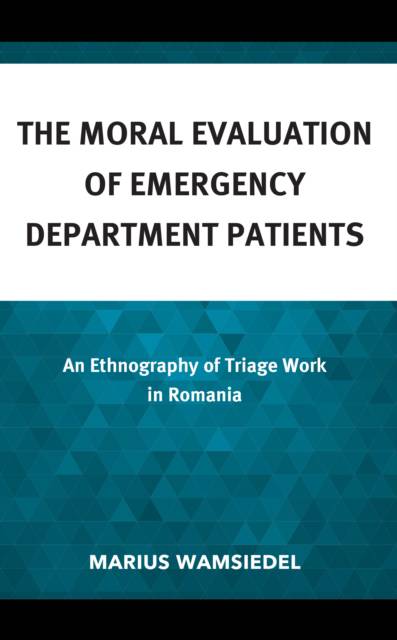
The Moral Evaluation of Emergency Department Patients
An Ethnography of Triage Work in Romania
Marius Wamsiedel
€ 169,95
+ 339 punten
Omschrijving
In The Moral Evaluation of Emergency Department Patients: An Ethnography of Triage Work in Romania, Marius Wamsiedel examines the social categorization of patients and its consequences at two emergency departments in Romania. Based on long-term ethnographic fieldwork, this work argues that moral evaluation is an attempt on the part of triage nurses and clerks to keep the emergency service afloat in the context of high-care demand, insufficient resources, and uneven access to primary care. At the same time, Wamsiedel argues that moral evaluation is an effort to align the provision of emergency services with socially dominant values, norms, and representations. As such, the moral evaluation of patients becomes a Procrustean bed that reduces some inequities in access to health care while generating or amplifying others. By adopting an interactionist lens, Wamsiedel unravels the underlying social logic of moral evaluation, the criteria and assumptions that inform it, and attempts by triage workers and patient to negotiate access to emergency care. The Moral Evaluation of Emergency Department Patients offers new ways of understanding the work of street-level bureaucracies and informal barriers to care.
Specificaties
Betrokkenen
- Auteur(s):
- Uitgeverij:
Inhoud
- Aantal bladzijden:
- 198
- Taal:
- Engels
- Reeks:
Eigenschappen
- Productcode (EAN):
- 9781666916546
- Verschijningsdatum:
- 28/03/2023
- Uitvoering:
- Hardcover
- Formaat:
- Genaaid
- Afmetingen:
- 152 mm x 229 mm
- Gewicht:
- 462 g



Alleen bij Standaard Boekhandel
+ 339 punten op je klantenkaart van Standaard Boekhandel
Cadeau

AANGERADEN


Beoordelingen
We publiceren alleen reviews die voldoen aan de voorwaarden voor reviews. Bekijk onze voorwaarden voor reviews.