


- Afhalen na 1 uur in een winkel met voorraad
- Gratis thuislevering in België vanaf € 30
- Ruim aanbod met 7 miljoen producten
- Afhalen na 1 uur in een winkel met voorraad
- Gratis thuislevering in België vanaf € 30
- Ruim aanbod met 7 miljoen producten





€ 29,95
+ 59 punten
Uitvoering
Eenvoudig bestellen
Veilig betalen


Gratis thuislevering vanaf € 30 (via bpost)
Gratis levering in je Standaard Boekhandel
Omschrijving
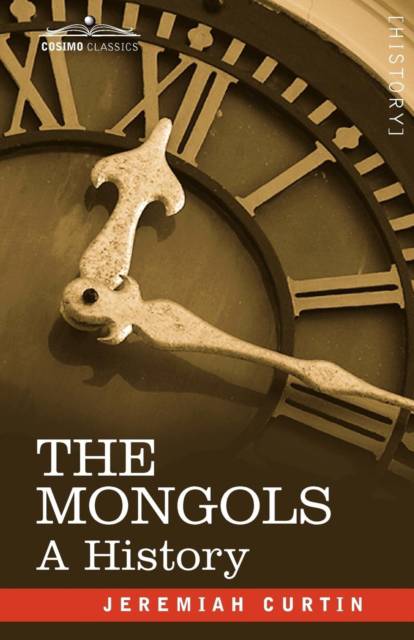
Praised by American president Theodore Roosevelt for his superior scholarship, folklorist Jeremiah Curtin was considered an accomplished translator, but The Mongols, published in 1908, is one of his few works of original nonfiction. At the time Curtin was writing, very little was known about the Mongols, even among well-educated men, and so this captivating book still serves as an excellent general introduction to the Mongol culture. Curtin describes their homeland and early society as herdsman and raiders and, through folklore, introduces the first leaders, or Khans, including the rise of Temudjin, the great Genghis Khan, and his conquest of Central Asia. This detailed narrative history continues after Temudjin's death-when the Mongol Empire was divided among his sons, who continued wars of conquest against the Chinese, Hungarians, Poles, and Japanese-and through to the dissolution of the empire following the death of Kublai Khan, the last man to possess centralized power among the Mongols. Students and historians will find this an extensive and informative read about an often overlooked society that nevertheless greatly influenced the development of the modern world. American author JEREMIAH CURTIN (1835-1906) was born in Milwaukee, Wisconsin. After graduating from Harvard in 1863, he moved to Russia and worked as a translator, later publishing Henryk Sienkiewicz's Trilogy (1884-1888) and Boleslaw Prus's The Pharaoh and the Priest (1902).
Specificaties
Betrokkenen
- Auteur(s):
- Uitgeverij:
Inhoud
- Aantal bladzijden:
- 456
- Taal:
- Engels
Eigenschappen
- Productcode (EAN):
- 9781605201368
- Verschijningsdatum:
- 1/06/2008
- Uitvoering:
- Paperback
- Formaat:
- Trade paperback (VS)
- Afmetingen:
- 140 mm x 216 mm
- Gewicht:
- 576 g



Alleen bij Standaard Boekhandel
+ 59 punten op je klantenkaart van Standaard Boekhandel
CADEAU

AANGERADEN


Beoordelingen
We publiceren alleen reviews die voldoen aan de voorwaarden voor reviews. Bekijk onze voorwaarden voor reviews.