


- Afhalen na 1 uur in een winkel met voorraad
- Gratis thuislevering in België vanaf € 30
- Ruim aanbod met 7 miljoen producten
- Afhalen na 1 uur in een winkel met voorraad
- Gratis thuislevering in België vanaf € 30
- Ruim aanbod met 7 miljoen producten





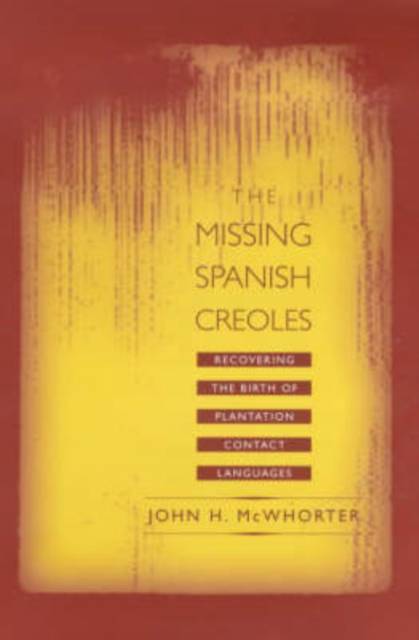
The Missing Spanish Creoles
Recovering the Birth of Plantation Contact Languages
John McWhorter
Hardcover | Engels
€ 106,95
+ 213 punten
Omschrijving
John McWhorter challenges an enduring paradigm among linguists in this provocative exploration of the origins of plantation creoles. Using a wealth of data--linguistic, sociolinguistic, historical--he proposes that the "limited access model" of creole genesis is seriously flawed. That model maintains that plantation creole languages emerged because African slaves greatly outnumbered whites on colonial plantations. Having little access to the slaveholders' European languages, the slaves were forced to build a new language from what fragments they did acquire. Not so, says McWhorter, who posits that plantation creole originated in West African trade settlements, in interactions between white traders and slaves, some of whom were eventually transported overseas.
The evidence that most New World creoles were imports traceable to West Africa strongly suggests that the well-established limited access model for plantation creole needs revision. In forcing a reexamination of this basic tenet, McWhorter's book will undoubtedly cause controversy. At the same time, it makes available a vast amount of data that will be a valuable resource for further explorations of genesis theory.
The evidence that most New World creoles were imports traceable to West Africa strongly suggests that the well-established limited access model for plantation creole needs revision. In forcing a reexamination of this basic tenet, McWhorter's book will undoubtedly cause controversy. At the same time, it makes available a vast amount of data that will be a valuable resource for further explorations of genesis theory.
Specificaties
Betrokkenen
- Auteur(s):
- Uitgeverij:
Inhoud
- Aantal bladzijden:
- 292
- Taal:
- Engels
Eigenschappen
- Productcode (EAN):
- 9780520219991
- Verschijningsdatum:
- 3/07/2000
- Uitvoering:
- Hardcover
- Formaat:
- Genaaid
- Afmetingen:
- 161 mm x 236 mm
- Gewicht:
- 594 g


Alleen bij Standaard Boekhandel
+ 213 punten op je klantenkaart van Standaard Boekhandel
CADEAU


Beoordelingen
We publiceren alleen reviews die voldoen aan de voorwaarden voor reviews. Bekijk onze voorwaarden voor reviews.