


- Afhalen na 1 uur in een winkel met voorraad
- Gratis thuislevering in België vanaf € 30
- Ruim aanbod met 7 miljoen producten
- Afhalen na 1 uur in een winkel met voorraad
- Gratis thuislevering in België vanaf € 30
- Ruim aanbod met 7 miljoen producten





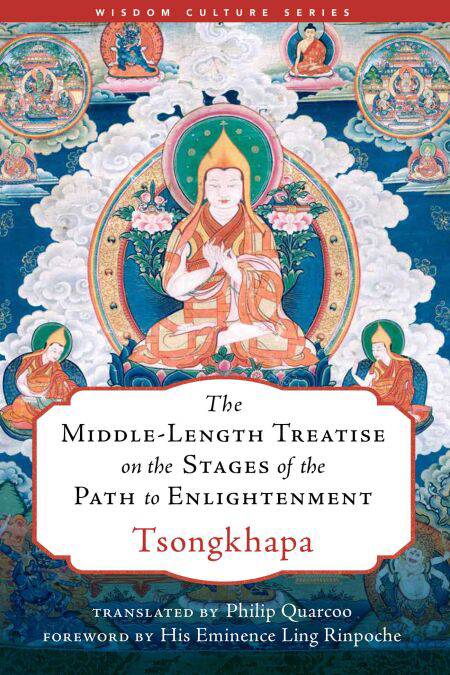
The Middle-Length Treatise on the Stages of the Path to Enlightenment E-BOOK
Tsongkhapa
E-book | Engels
€ 38,01
+ 38 punten
Eenvoudig bestellen
Veilig betalen


Onmiddellijk geleverd via e-mail
Omschrijving
The first complete English translation of renowned scholar-saint Tsongkhapa's Middle-Length Treatise on the Stages of the Path.
Tsongkhapa (1357–1419), the author of the well-known Great Treatise on the Stages of the Path to Enlightenment and the teacher of the First Dalai Lama, is renowned as one of the greatest scholar-saints that Tibet has ever produced. A dozen years after writing the Great Treatise, he wrote the Middle-Length Treatise on the Stages of the Path, presented here in its first complete English translation.
Half the length of the well-known Great Treatise, this work similarly presents a systematic overview of the Buddhist path. Tsongkhapa begins by abridging the longer work, distilling its explanations for quicker integration. He presents a series of meditations, beginning with recognizing the rarity of our human existence and the great opportunities it affords, followed by reflections on impermanence, suffering, and the promise of liberation from our past actions, until proceeding to the path of bodhisattvas, whose universal compassion seeks to free every being from suffering. Tsongkhapa gives especially detailed instructions on samatha, the deep meditative concentration that is a precondition for the highest insight into the nature of reality. The final and largest section, on that very insight, is unique to this work, particularly Tsongkhapa’s presentation of conventional truth and ultimate truth.
Those new to Tibetan Buddhist teachings will benefit from the approachable style of this classic handbook for enlightenment, and beginners and longtime practitioners alike will cherish the clear guidance from one of Tibet’s great luminaries.
Tsongkhapa (1357–1419), the author of the well-known Great Treatise on the Stages of the Path to Enlightenment and the teacher of the First Dalai Lama, is renowned as one of the greatest scholar-saints that Tibet has ever produced. A dozen years after writing the Great Treatise, he wrote the Middle-Length Treatise on the Stages of the Path, presented here in its first complete English translation.
Half the length of the well-known Great Treatise, this work similarly presents a systematic overview of the Buddhist path. Tsongkhapa begins by abridging the longer work, distilling its explanations for quicker integration. He presents a series of meditations, beginning with recognizing the rarity of our human existence and the great opportunities it affords, followed by reflections on impermanence, suffering, and the promise of liberation from our past actions, until proceeding to the path of bodhisattvas, whose universal compassion seeks to free every being from suffering. Tsongkhapa gives especially detailed instructions on samatha, the deep meditative concentration that is a precondition for the highest insight into the nature of reality. The final and largest section, on that very insight, is unique to this work, particularly Tsongkhapa’s presentation of conventional truth and ultimate truth.
Those new to Tibetan Buddhist teachings will benefit from the approachable style of this classic handbook for enlightenment, and beginners and longtime practitioners alike will cherish the clear guidance from one of Tibet’s great luminaries.
Specificaties
Betrokkenen
- Auteur(s):
- Vertaler(s):
- Uitgeverij:
Inhoud
- Aantal bladzijden:
- 474
- Taal:
- Engels
Eigenschappen
- Productcode (EAN):
- 9781614294597
- Verschijningsdatum:
- 28/06/2021
- Uitvoering:
- E-book
- Beveiligd met:
- Adobe DRM
- Formaat:
- ePub


Alleen bij Standaard Boekhandel
+ 38 punten op je klantenkaart van Standaard Boekhandel
CADEAU

AANGERADEN


Beoordelingen
We publiceren alleen reviews die voldoen aan de voorwaarden voor reviews. Bekijk onze voorwaarden voor reviews.