


- Afhalen na 1 uur in een winkel met voorraad
- Gratis thuislevering in België vanaf € 30
- Ruim aanbod met 7 miljoen producten
- Afhalen na 1 uur in een winkel met voorraad
- Gratis thuislevering in België vanaf € 30
- Ruim aanbod met 7 miljoen producten




Omschrijving
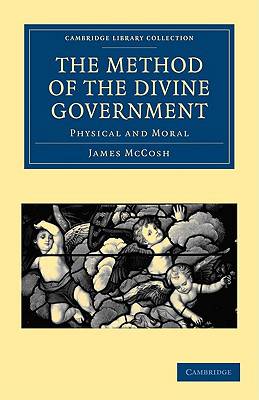
This 1850 edition of The Method of The Divine Government is the Scottish philosopher and clergyman James McCosh's influential account of how God's providence, which in his opinion is an unquestionable fact, governs the world in both a physical (external) and in a moral (internal) sense. The latter is particularly connected to the many layers that make up man's conscience. This second edition, which consists of four parts ('books') and an appendix, differs from the original version as McCosh pays far more attention to first principles than to fundamental ones. He seeks to pinpoint God's character and probes the depths of man's conscience (First Book) and in the following he delves into the physical aspects of God's government, paying particular attention to Comte's Positivism. McCosh devotes part three to a detailed analysis of the human mind and moral nature and finally in the fourth part he reconciles God and man.
Specificaties
Betrokkenen
- Auteur(s):
- Uitgeverij:
Inhoud
- Aantal bladzijden:
- 556
- Taal:
- Engels
- Reeks:
Eigenschappen
- Productcode (EAN):
- 9781108004145
- Verschijningsdatum:
- 20/07/2009
- Uitvoering:
- Paperback
- Formaat:
- Trade paperback (VS)
- Afmetingen:
- 140 mm x 216 mm
- Gewicht:
- 698 g


Alleen bij Standaard Boekhandel
+ 100 punten op je klantenkaart van Standaard Boekhandel
AANGERADEN


Beoordelingen
We publiceren alleen reviews die voldoen aan de voorwaarden voor reviews. Bekijk onze voorwaarden voor reviews.