


- Afhalen na 1 uur in een winkel met voorraad
- Gratis thuislevering in België vanaf € 30
- Ruim aanbod met 7 miljoen producten
- Afhalen na 1 uur in een winkel met voorraad
- Gratis thuislevering in België vanaf € 30
- Ruim aanbod met 7 miljoen producten





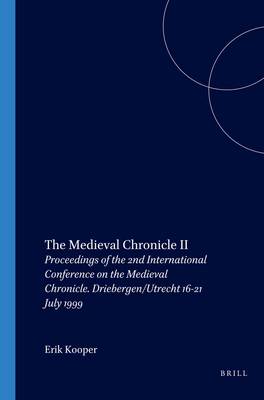
The Medieval Chronicle II
Proceedings of the 2nd International Conference on the Medieval Chronicle. Driebergen/Utrecht 16-21 July 1999
€ 60,78
+ 121 punten
Omschrijving
After the success of the first international conference on the medieval chronicle, it was decided that another would be in place. It was held in the summer of 1999, and again drew some 150 participants. There are several reasons why the chronicle is particularly suited as the topic of an international conference. In the first place there is its ubiquity: all over Europe and throughout the Middle Ages chronicles were written, both in Latin and in the vernacular, and not only in Europe but also in the countries neighbouring on it, like those of the Arabic world.
Secondly, all chronicles raise such questions as by whom, for whom, or for what purpose were they written, how do they reconstruct the past, what determined the choice of verse or prose, or what kind of literary influences are discernable in them. Finally, many chronicles have been beautifully illuminated, and the relation between text and image leads to a wholly different set of questions.
Like its predecessor this volume of conference papers aims to provide a representative survey of the on-going research in the field of chronicle studies, illustrated by examples from specific chronicles from a wide variety of countries, periods and cultural backgrounds. They are introduced by the opening address by David Dumville, on the question What is a chronicle?
Secondly, all chronicles raise such questions as by whom, for whom, or for what purpose were they written, how do they reconstruct the past, what determined the choice of verse or prose, or what kind of literary influences are discernable in them. Finally, many chronicles have been beautifully illuminated, and the relation between text and image leads to a wholly different set of questions.
Like its predecessor this volume of conference papers aims to provide a representative survey of the on-going research in the field of chronicle studies, illustrated by examples from specific chronicles from a wide variety of countries, periods and cultural backgrounds. They are introduced by the opening address by David Dumville, on the question What is a chronicle?
Specificaties
Betrokkenen
- Uitgeverij:
Inhoud
- Aantal bladzijden:
- 280
- Taal:
- Engels
- Reeks:
- Reeksnummer:
- nr. 144
Eigenschappen
- Productcode (EAN):
- 9789042008342
- Verschijningsdatum:
- 1/01/2002
- Uitvoering:
- Paperback
- Formaat:
- Trade paperback (VS)
- Afmetingen:
- 155 mm x 234 mm
- Gewicht:
- 412 g

Alleen bij Standaard Boekhandel
+ 121 punten op je klantenkaart van Standaard Boekhandel
Cadeau

AANGERADEN


Beoordelingen
We publiceren alleen reviews die voldoen aan de voorwaarden voor reviews. Bekijk onze voorwaarden voor reviews.