


- Afhalen na 1 uur in een winkel met voorraad
- Gratis thuislevering in België vanaf € 30
- Ruim aanbod met 7 miljoen producten
- Afhalen na 1 uur in een winkel met voorraad
- Gratis thuislevering in België vanaf € 30
- Ruim aanbod met 7 miljoen producten





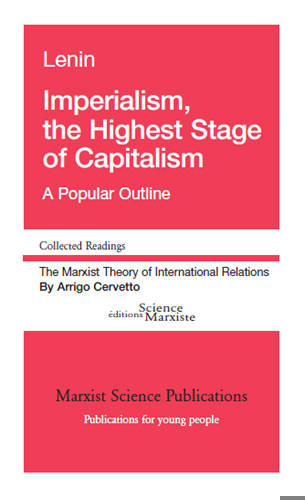
The marxist theory of international relations
Vladimir Ilitch Lénine, Arrigo Cervetto
Paperback | Engels
€ 4,74
+ 9 punten
Omschrijving
Written in the first half of 1916 and published in the spring of 1917, Imperialism, the Highest Stage of Capitalism remains, even after a century, the most organic synthesis of the characteristics of an epoch that is still continuing.
While the First World War was raging, faced with the theories of the bourgeoisie and opportunism, and linking himself back to the method of the Masters of Marxism, Lenin identified the economic and political characteristics of this historical phase, the contradictory laws of its development, and the content and forms of imperialism.
In his preface to the German and French editions of July 1920, the author stressed the dual political and strategic significance of this book.
It was inspired by the requirements of the political struggle against the pacifist ideologies and the illusory perspective of « global democracy », which prevented the revolutionary minority of the international proletariat from finding an independent perspective and from breaking with its subordination to the ruling class’s ideology in all its many variations.
The other fundamental aspect that Lenin stresses while the revolutionary battle was raging is the imperialist nature of war... a war for a new « division of the world » and a redefinition of the spheres of influence among the six great powers of the time.
While the First World War was raging, faced with the theories of the bourgeoisie and opportunism, and linking himself back to the method of the Masters of Marxism, Lenin identified the economic and political characteristics of this historical phase, the contradictory laws of its development, and the content and forms of imperialism.
In his preface to the German and French editions of July 1920, the author stressed the dual political and strategic significance of this book.
It was inspired by the requirements of the political struggle against the pacifist ideologies and the illusory perspective of « global democracy », which prevented the revolutionary minority of the international proletariat from finding an independent perspective and from breaking with its subordination to the ruling class’s ideology in all its many variations.
The other fundamental aspect that Lenin stresses while the revolutionary battle was raging is the imperialist nature of war... a war for a new « division of the world » and a redefinition of the spheres of influence among the six great powers of the time.
Specificaties
Betrokkenen
- Auteur(s):
- Uitgeverij:
Inhoud
- Aantal bladzijden:
- 163
- Taal:
- Engels
Eigenschappen
- Productcode (EAN):
- 9782912639868
- Verschijningsdatum:
- 1/01/2016
- Uitvoering:
- Paperback
- Afmetingen:
- 120 mm x 200 mm
- Gewicht:
- 202 g


Alleen bij Standaard Boekhandel
+ 9 punten op je klantenkaart van Standaard Boekhandel

Beoordelingen
We publiceren alleen reviews die voldoen aan de voorwaarden voor reviews. Bekijk onze voorwaarden voor reviews.